

Low-resolution displays once belonged to clocks, signs and early computer interfaces. On a contemporary desk, the same visible grid can carry an animation, a weather icon, a subscriber count or a row of small data panels. The pixel has not disappeared beneath higher resolution; it has returned as a deliberate design language.
Divoom’s Pixoo-64Ⅱ, Times Gate and Ditoo-Pro show three ways that language is becoming part of everyday rooms. One is a square canvas, one a segmented dashboard and one a speaker shaped around physical controls. Together they reveal how a screen can move from an anonymous component to the identity of the object itself.
The grid makes digital information physical
A conventional phone display aims to make its pixels disappear. A pixel display does the opposite. The grid is visible, colours are simplified and curves become stepped. This reduction gives digital content a material quality: the image looks built from units rather than projected through a seamless pane.
That visible construction helps the screen coexist with furniture and desk accessories. It behaves less like a miniature phone and more like an illuminated object with a recognisable texture.
Pixoo-64Ⅱ treats the screen as a square canvas
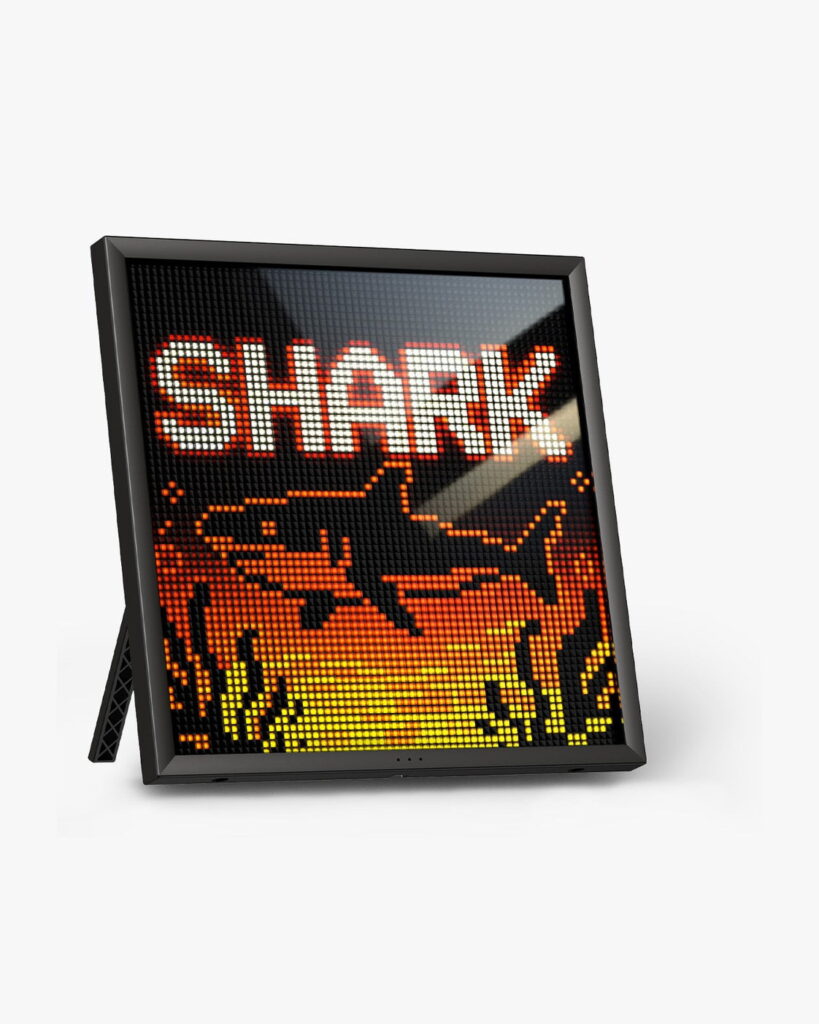
The Pixoo-64Ⅱ uses a 64 × 64 LED grid inside a black square frame. Divoom presents it for pixel art, animation, clocks, social counters and information widgets, with desk and wall placement.
Its form does not dictate one hierarchy. A single image can fill the panel, while a clock or counter can reorganise the same grid around text. The frame stays constant as the role changes. This makes software variety part of the product’s visual identity rather than a hidden service behind it.
A large grid changes the room at two distances
Close up, the panel is a field of individual LEDs. Across the room, the units combine into a sign or animated picture. That double reading distinguishes the object from a printed image. It has texture nearby and communication value from farther away.
The same quality creates a limit. Moving graphics can command attention even when the user no longer needs the information. Placement and content pace determine whether the display becomes ambient or intrusive.
Times Gate turns one screen into five instruments
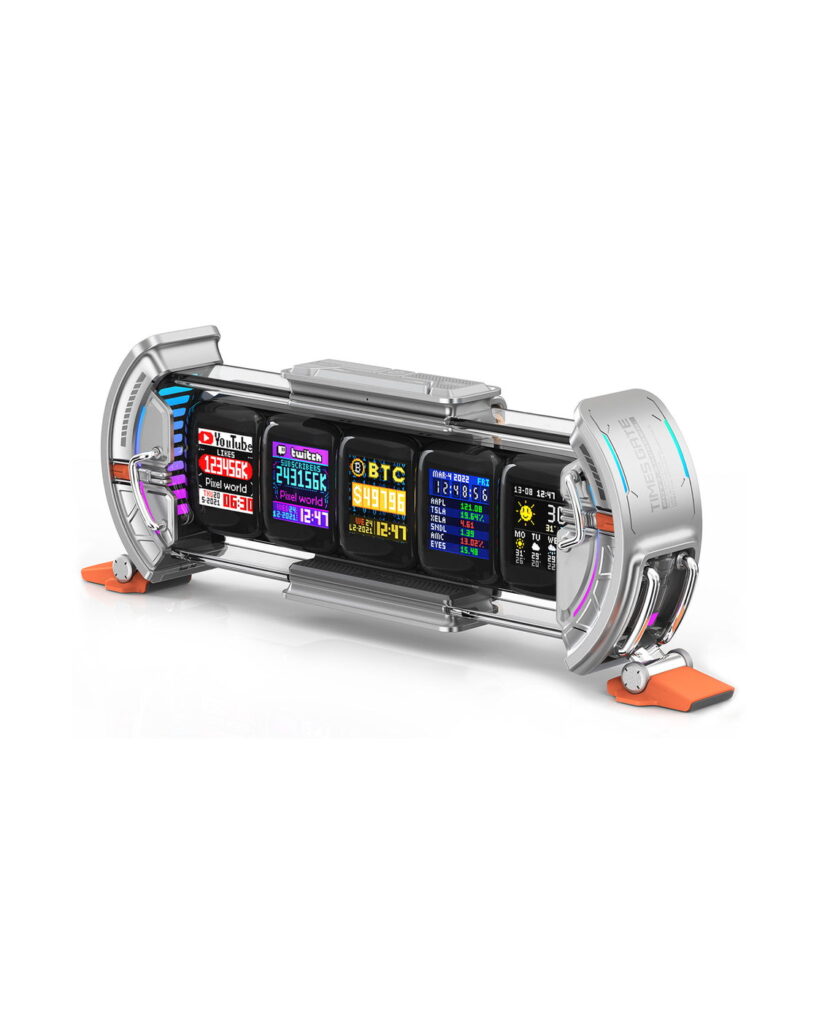
The Times Gate takes another approach. Five independent 128 × 128 colour LCD panels sit inside one horizontal frame. Divoom shows clocks, weather, financial data, social counters and pixel graphics distributed across the modules.
The segmentation recalls an instrument panel. Each display can hold a separate category, allowing the eye to move between fixed positions rather than search one changing page. The enclosure makes the five screens read as a single desk object while preserving their individual roles.
The dashboard is an editorial choice
Five screens do not automatically produce clarity. Someone still decides which information deserves a permanent position, how often it changes and what should be left out. A dashboard is useful because it excludes as much as because it displays.
This is where a personal information object differs from a general-purpose monitor. Its value lies in the discipline of a smaller visual field. When every panel competes with colour and motion, that advantage can disappear.
Ditoo-Pro brings back the visible interface
The Ditoo-Pro combines a pixel screen, manufacturer-rated 15W speaker, mechanical-style keys and a joystick in a retro-computer form. The enclosure turns taps, presses and display changes into a small physical performance.
The reference to an early computer is not only nostalgic. It gives the screen a body and an obvious orientation. The user faces a front panel rather than a floating rectangle, and the keys remain visible even when the app is elsewhere.
Physical controls make software feel located
App-controlled products can make functions feel dispersed across menus and accounts. A key or joystick gives an action a stable place. Ditoo-Pro does not remove software dependence, but its controls let part of the experience remain attached to the object.
That combination—software content inside a visually legible enclosure—is central to the appeal of current pixel devices. The hardware communicates how it wants to be used before every feature is understood.
The app and network remain behind the object
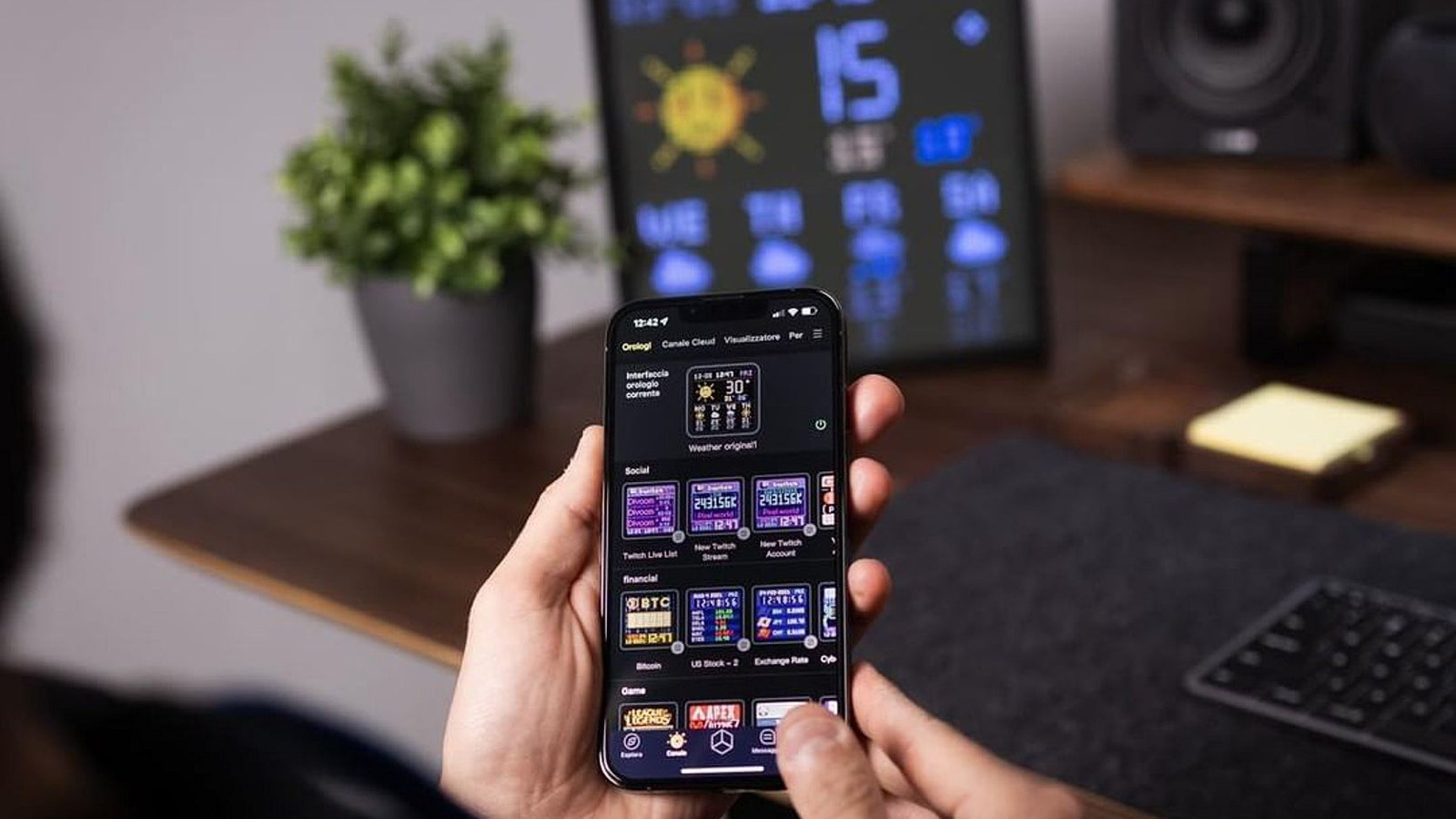
The physical presence of these displays can obscure their dependence on apps, accounts, network access and external data services. A weather widget, social counter or financial value is not generated by the screen itself. It arrives through a chain that can change after purchase.
This does not make the object unreal. It means the designed object includes an invisible service layer. Any serious reading of the category has to include that layer alongside frame, grid and colour.
Pixel art creates a shared visual vocabulary
A coarse grid limits detail while making contributions easier to recognise as part of one medium. Clocks, icons and characters share the same block structure even when different users create them. That consistency helps a device host varied content without losing its identity.
Community libraries also change the meaning of ownership. The buyer receives a screen and a way to access or create content, not a single finished image. The object is completed repeatedly through selection.
Information furniture, not a miniature phone
These products are most interesting when they stop imitating a phone. A square pixel panel on a wall, a five-module desktop dashboard and a screen inside a speaker all assign information to a specific place in the room.
That placement can create a small ritual: glance at the desk, change an animation, press a key, leave a clock running. The screen becomes part of the environment rather than a device carried from task to task.
What the photographs cannot establish
Public images can establish product identity, broad form, screen arrangement and intended placement. They cannot prove brightness, colour accuracy, data latency, app reliability, network compatibility, audio quality or long-term firmware support.
ChinoMuse has not installed the Divoom app, measured the displays, listened to Ditoo-Pro or verified third-party widgets. Product functions and specifications remain attributed to the cited official pages checked on 18 August 2026.
The return of the pixel is about limits
Pixel displays stand out because they accept visible limits. Resolution is finite, information must be compressed and the grid cannot pretend to be every other medium. Those constraints make the object easier to recognise and can make a small amount of information easier to place.
The strongest examples do not compete with the full capability of a phone or monitor. They give selected digital content a stable, physical address.