
A contemporary tea set is rarely just a teapot with matching cups. It is a small service system: water enters one vessel, leaves through a lid or spout, may pass through a fair cup, and reaches cups sized for a particular rhythm. The tray, towel, infuser and carrying case can matter as much as the visible pot. Choosing well therefore starts with the intended sequence and setting, not a decorative style name.
This guide uses published records from ZENS, Loveramics and SHANG XIA to show how those decisions can be checked. It is not a ranking and does not report physical use. Capacities, materials and set contents remain attributed to the cited first-party pages and should be reconfirmed for the exact current offer.
1. Start with the serving setting
Define where the set will live and how many people it normally serves. A fixed home service can tolerate a broad tray and several loose pieces. A desk set benefits from a smaller footprint and a simple route from pot to cup. A travel set needs each component to nest, resist movement and return to a known place inside the bag. “Portable” should describe the complete packed system, not merely a small teapot.
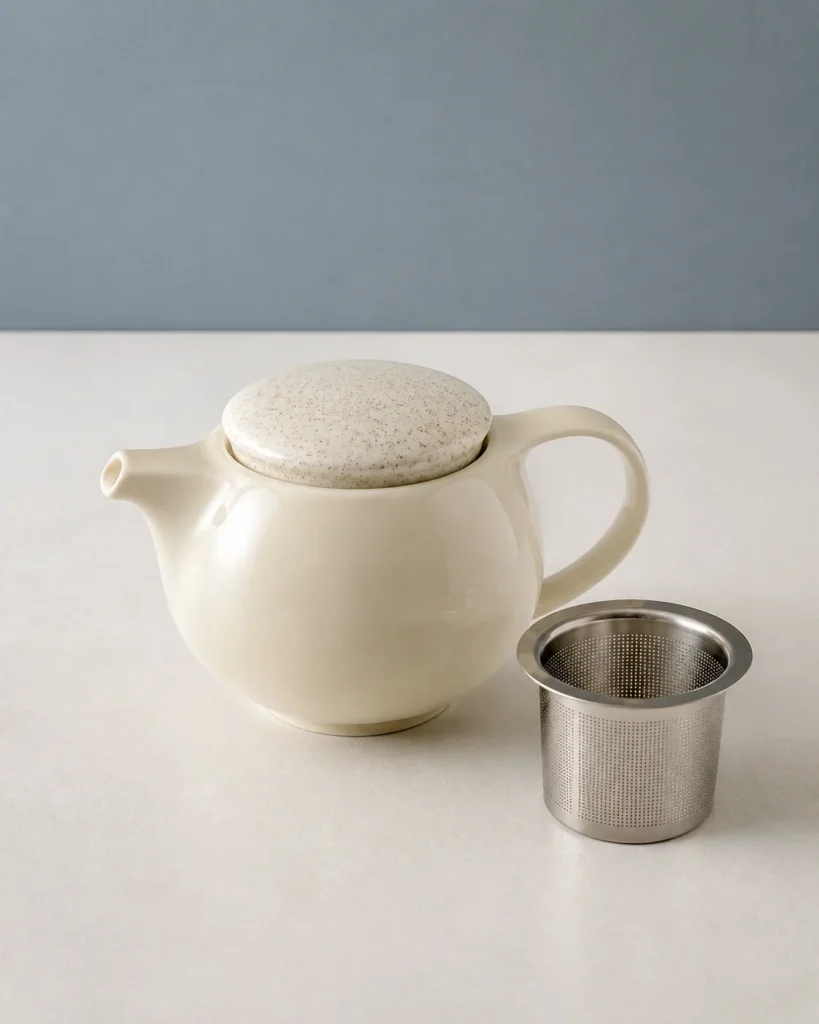
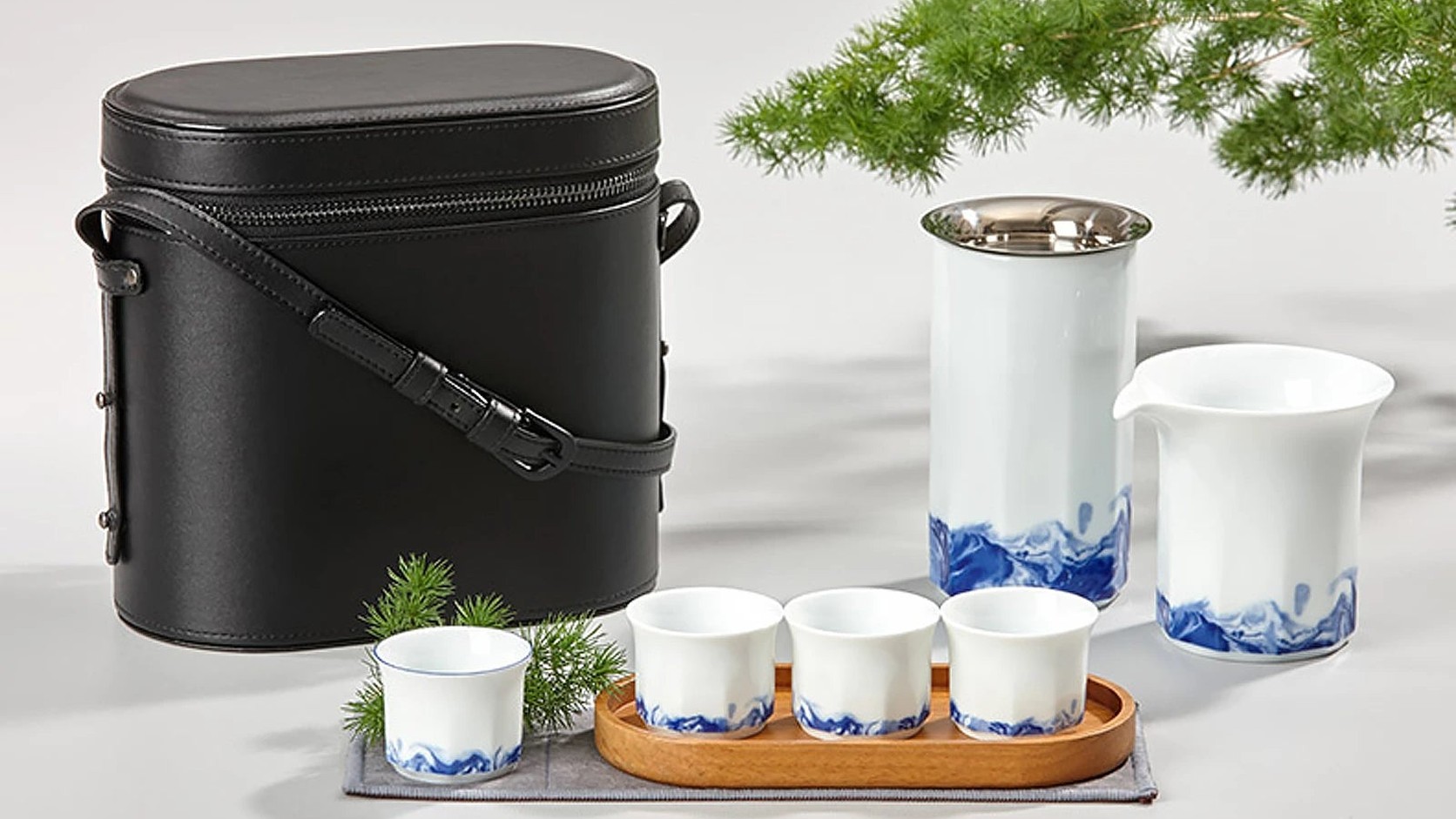
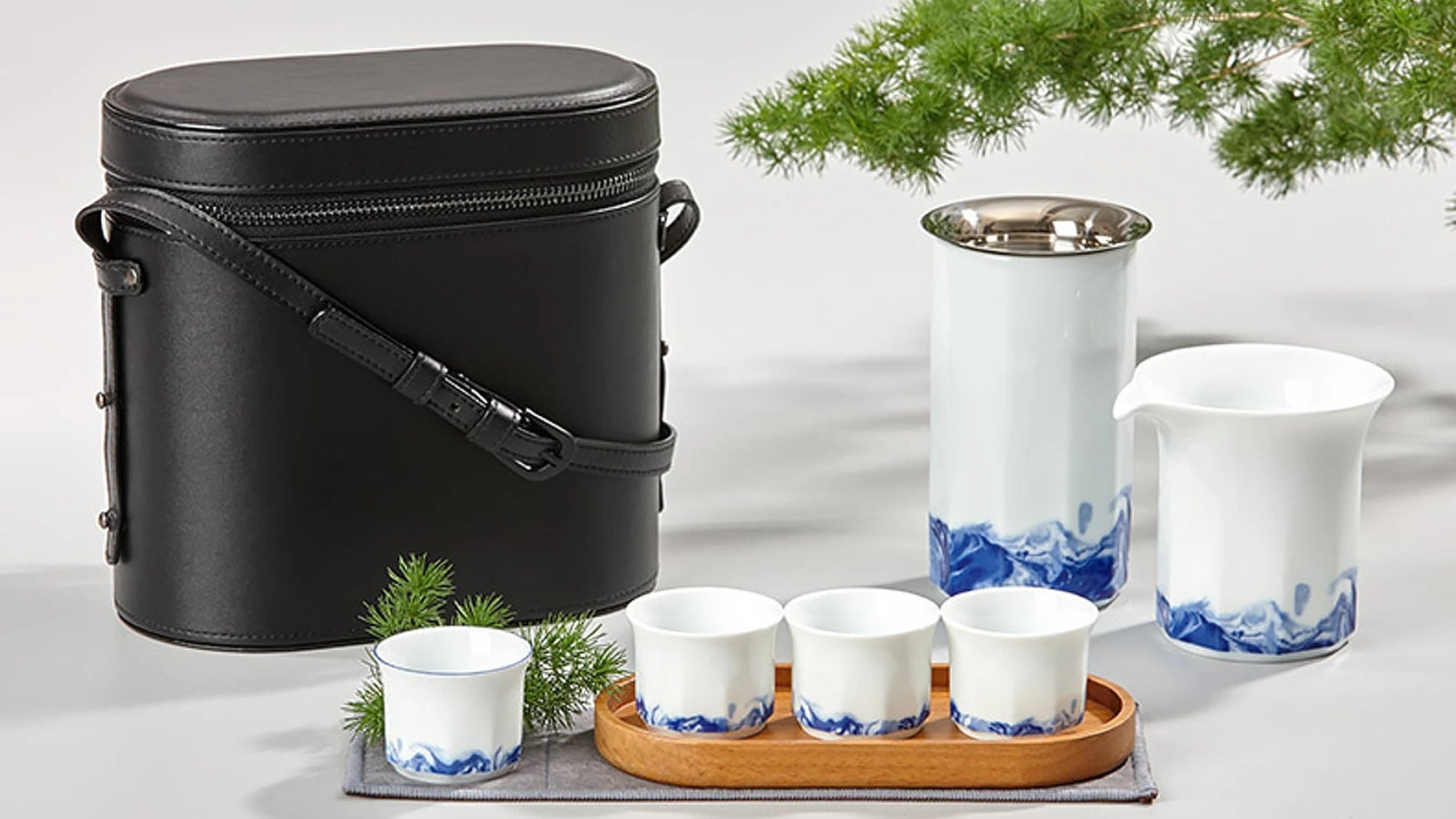
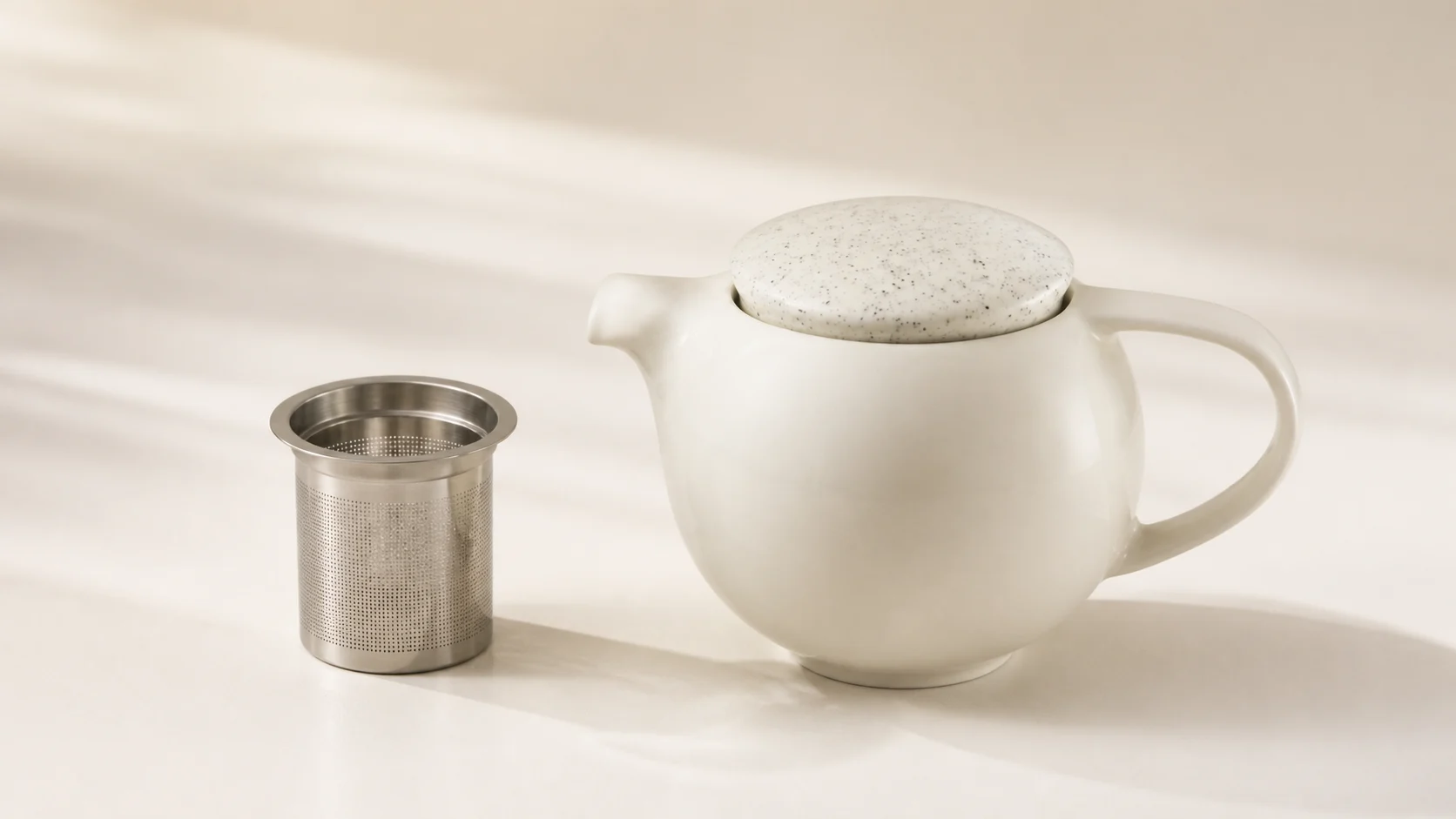
The ZENS Starboard record, for example, combines a teapot, fair cup, four 40ml cups, tray, towel, silicone sleeves and a carrying bag. The bag and protection pieces are part of the use case. By contrast, the Loveramics Pro Tea 400ml teapot is a single table-service object with an infuser; its compatibility with cups and trays must be planned separately.
2. Map the complete service sequence
Before comparing surfaces, write the sequence: steep, filter, pour, divide, serve and reset. A fair cup helps equalise strength across several cups. An integrated infuser can reduce loose pieces, but its depth, perforation and cleaning access still need checking. A 360-degree lid changes pouring direction, while a side handle changes wrist position and table clearance.
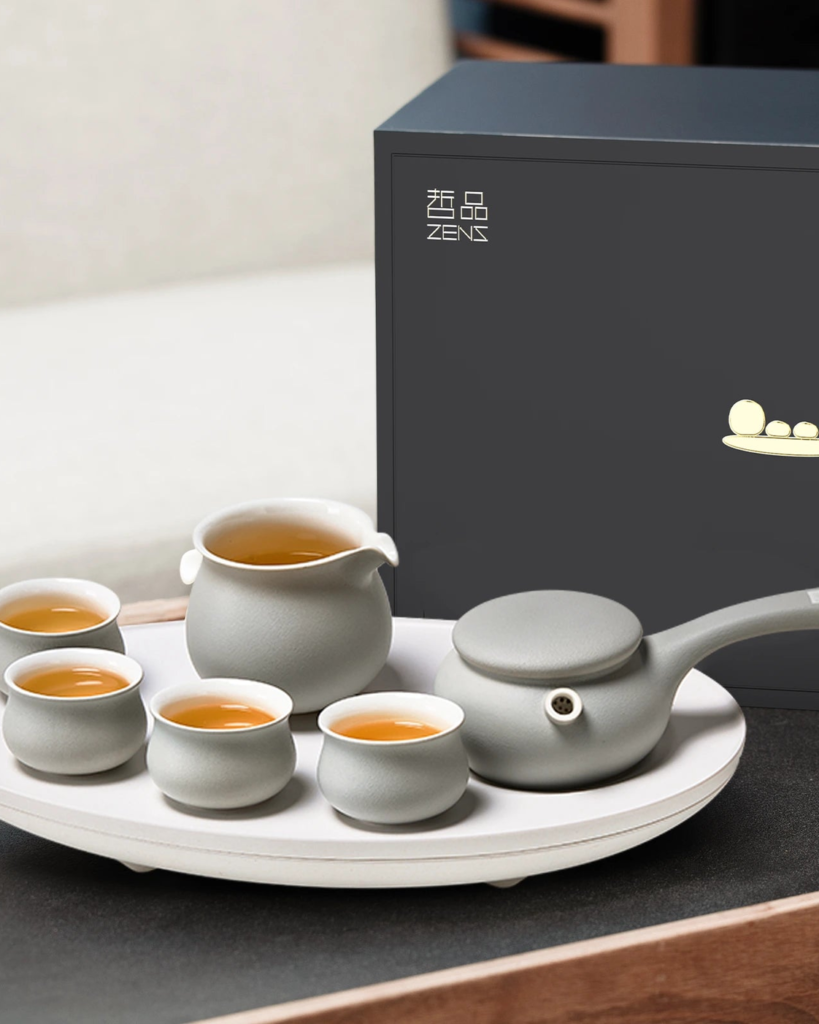
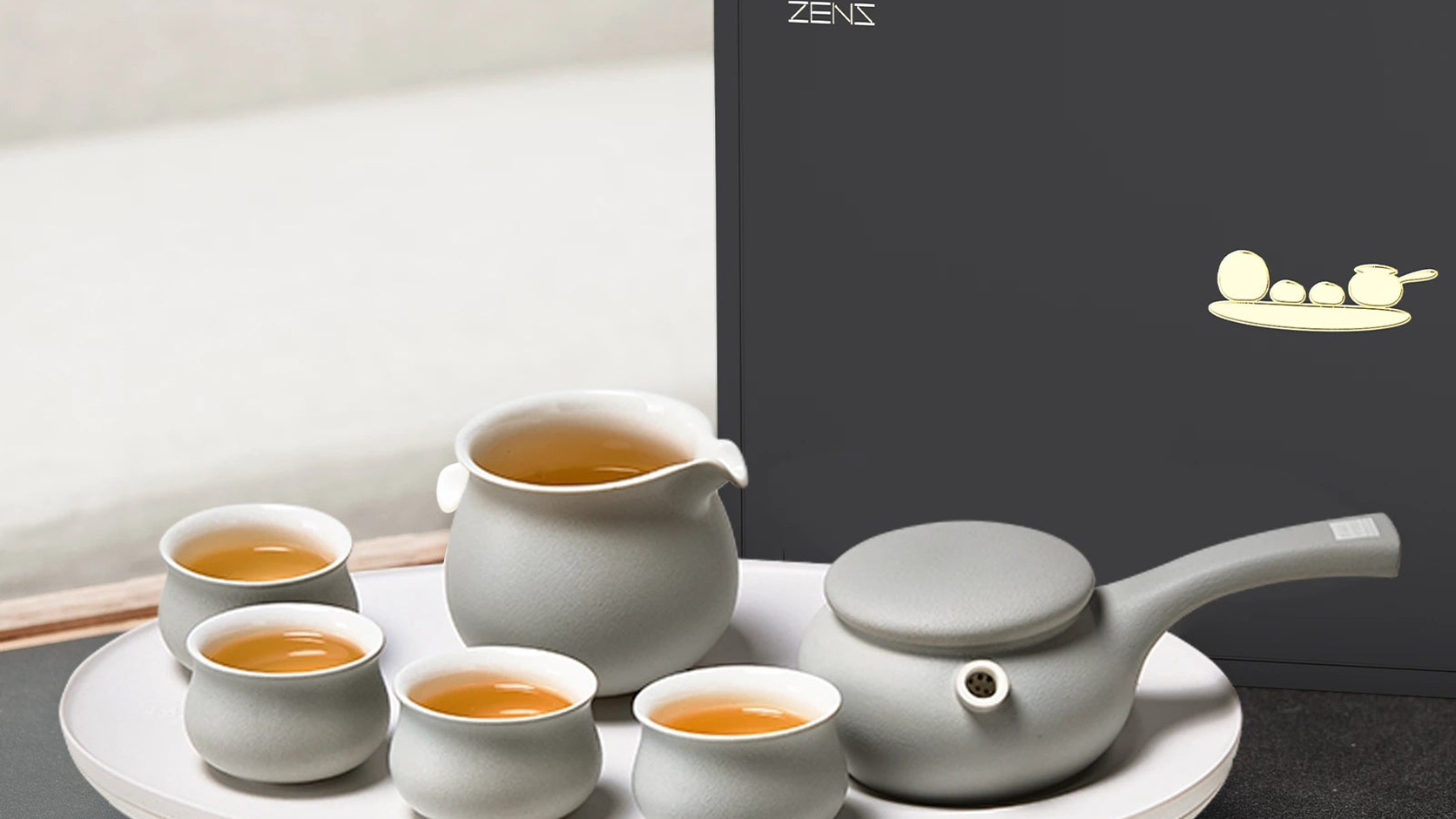
The Starboard teapot is presented with a spout-free 360-degree pour lid. The gray ZENS set uses a side-handle pot with an integrated infuser, a fair cup and four cups. These are different systems even when both are sold as compact contemporary tea services. The right choice follows the preferred serving routine rather than the number of photographed pieces.
3. Separate material identity from appearance
“Ceramic” is too broad to answer every practical question. Porcelain, Zisha clay, glass, stainless steel, bamboo, wood and fibre composites respond differently to staining, impact, temperature and cleaning. A listing may combine several materials in one set, so record which material belongs to which component instead of treating the whole package as one substance.
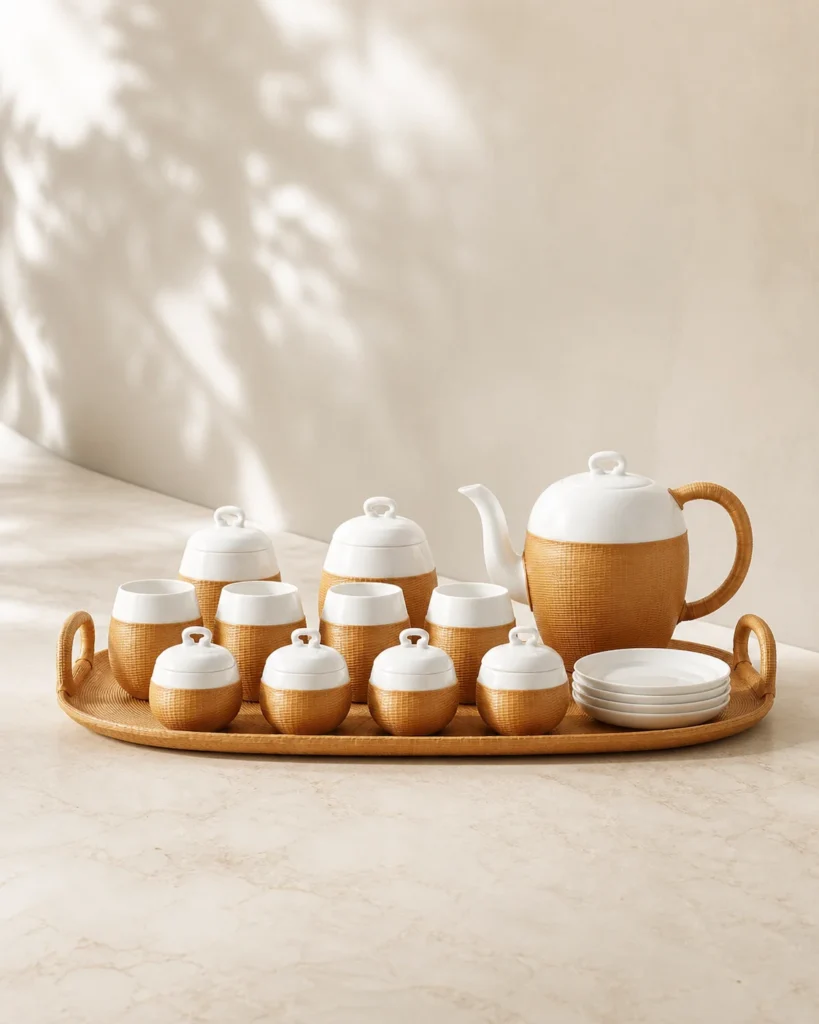
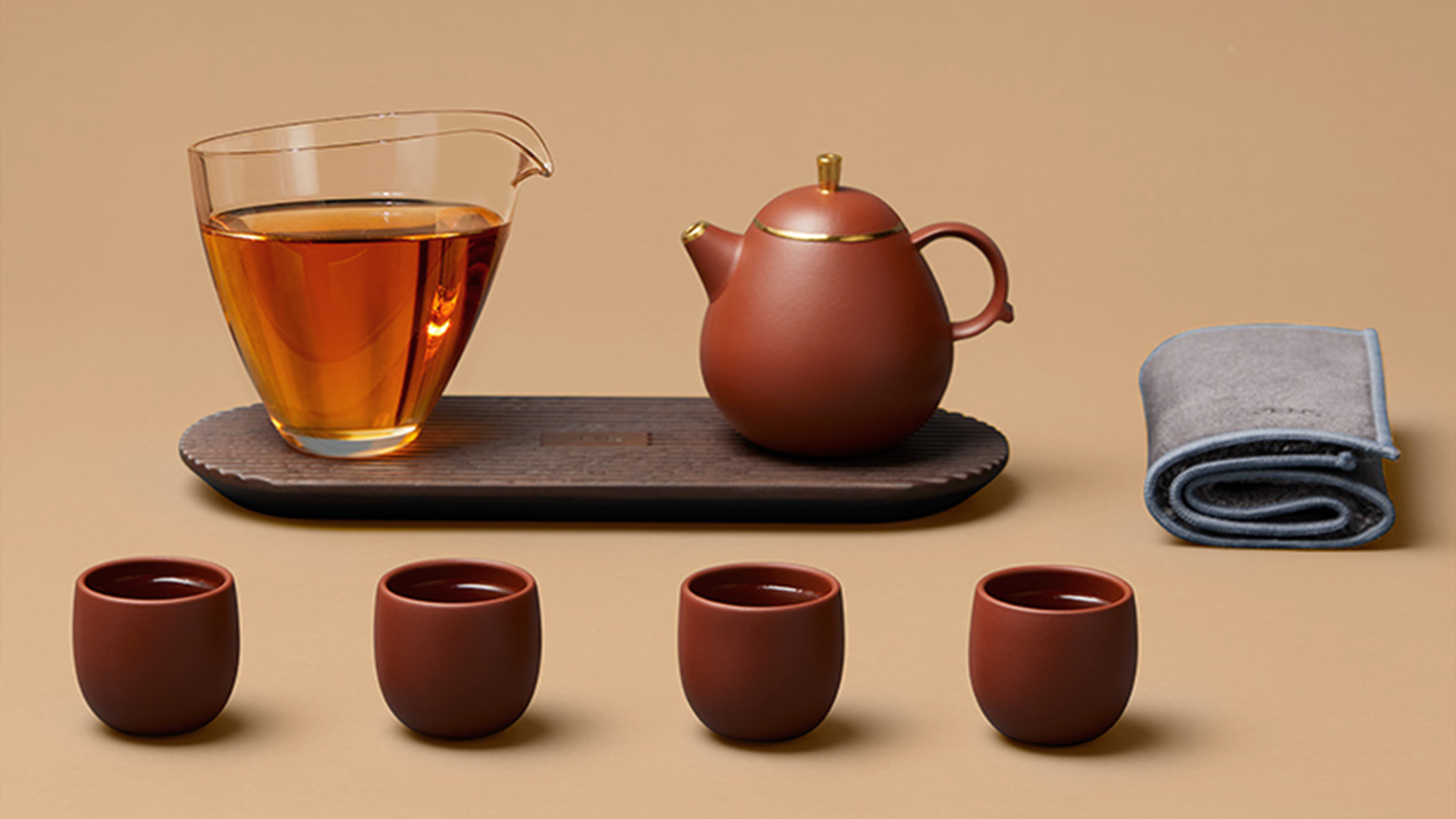
The Golden Pear service combines a Zhu Ni Zisha teapot, glass serving cup and walnut details. Starboard combines porcelain, a 304 stainless-steel lid, matte teak tray, silicone sleeves and a travel bag. SHANG XIA presents porcelain with bamboo weaving in the Bridge tea set. These descriptions establish construction identity; they do not by themselves prove flavour effects, durability or superior heat performance.
4. Read capacity as a relationship
A pot capacity only becomes meaningful beside the serving vessel and cup count. Add the nominal capacity of the cups, then compare it with the fair cup and teapot. Allow for leaves, headspace and the fact that published ounce and millilitre figures may be rounded. A larger fair cup than pot can be useful, but a set in which the cups greatly exceed the brewed volume may require multiple rounds.
Starboard lists an 8.29-US-fluid-ounce teapot, a 9.52-ounce fair cup and four 40ml cups. The gray Kyusu set lists a 6.7-ounce teapot, an 8.4-ounce fair cup and four 2-ounce cups. Golden Pear lists 7.7 ounces for both teapot and serving cup, plus four 1.5-ounce cups. These relationships say more about the intended round than one isolated capacity.
5. Check handle, lid and pouring geometry
Look at where the hand sits, how the lid is retained and whether the pour path crosses another component. A side handle may suit repeated short pours but needs lateral clearance. A conventional rear handle may be familiar yet extend the stored footprint. A lid without a projecting spout can pack neatly, although pour control cannot be inferred from photographs alone.
Ask the seller for the current manual or a clear product video when the mechanism is unusual. Confirm whether the lid must be held, how the infuser is removed, whether replacement parts exist and which hand orientation is shown. ChinoMuse has not measured drip control, balance, lid retention or handle temperature for the products cited here.
6. Treat travel as a packing specification
A genuine travel configuration should identify the case, internal protection and every item that returns to it. Verify packed dimensions and weight where published. Check whether cups touch each other, whether hard materials are separated and whether the bag protects against impact or only makes carrying easier. No soft case should be assumed to make porcelain break-proof.
The Starboard listing identifies a crossbody-style carrying configuration, silicone sleeves and a cotton towel. Golden Pear includes leather and tote carrying pieces. Those details are useful, but neither record should be read as a guarantee against leakage or breakage. For air or rail travel, the owner remains responsible for packing, local security rules and careful handling.
7. Distinguish included pieces from styling props
Product photography often includes water, leaves, books, flowers or surrounding trays that are not sold with the set. Use the written “included” list as the controlling record. Count lids separately where the seller does, and clarify whether towels, sleeves, trays and cases belong to every colour variant. A photograph of four cups does not establish that every regional SKU contains four.
Keep a short acquisition record: exact product name, colour, cup count, material description, included accessories, source URL and verification date. If a marketplace bundle differs from the official package, treat it as a separate configuration rather than merging the two.
8. Plan cleaning before choosing the finish
Consider leaf removal, infuser access, the inside of narrow serving vessels and the drying path for every nested piece. Porous or absorbent materials need different treatment from glass and stainless steel. Wood and bamboo components should not automatically follow the cleaning method for porcelain. Decorative metallic descriptions also require care instructions specific to the actual finish.
Starboard’s manufacturer advises hand washing. Golden Pear brings clay, glass, wood and decorative metal language into one set, so a single dishwasher assumption would be unsafe. The SHANG XIA bamboo-wrapped porcelain construction similarly requires the current care guidance for both components. Confirm whether any part should be kept dry, wiped only or removed before cleaning.
9. Use cups to define pace, not prestige
Small cups support repeated rounds and shared attention; larger cups suit slower individual service. Loveramics lists its Pro Tea Oriental cup at 145ml, substantially larger than the 40ml Starboard cups or 1.5-ounce Golden Pear cups. That does not make one format more authentic. It indicates a different serving pace and quantity per pour.
Match cup volume to the teas and social setting actually used. Also check rim shape, stacking behaviour and replacement availability. A complete four-cup set may be less practical than two replaceable cups if the official channel cannot supply a broken component.
10. Verify regional availability and exact identity
Product names, bundle contents and care directions can change between official regional stores. Follow the current first-party page, record the seller and avoid treating a similar photograph as proof of the same model. For clay or precious-metal language, retain the manufacturer’s wording without converting it into an independent material certification.
ChinoMuse has not purchased, handled or tested the cited sets. No claim is made about taste, heat retention, pouring accuracy, breakage resistance, craft authorship or shipping service. The purpose of this guide is to make the comparison record explicit enough that a buyer can ask precise questions before committing.
11. A concise pre-purchase record
- Setting: fixed table, desk, gift or travel.
- Sequence: pot, infuser, fair cup, cups and reset path.
- Capacity: teapot, serving cup, cup volume and count.
- Materials: record every component separately.
- Contents: distinguish included pieces from props.
- Care: washing, drying, stain and surface guidance.
- Travel: packed size, separation and case limitations.
- Source: exact official URL, variant and verification date.
12. Related ChinoMuse records
Compare the ZENS Starboard Travel Tea Set, ZENS Contemporary Kyusu Set, ZENS Golden Pear Portable Tea Set, Loveramics Pro Tea Teapot, Loveramics Pro Tea Cup and SHANG XIA Bridge Tea Set. These records preserve source-specific facts and limitations rather than declaring a universal winner.