
A sofa can organise a room, a chair can define a posture and a small table can hold the trace of a manufacturing process. Seen separately, these are different product categories. Seen together, Frank Chou’s Combo Sofa, Middle Chair and Flow Side Table form a more useful record: furniture moving between repeatable systems, individual objects and material-led craft.
This story is based on official public records for the Frank Chou collection. It is not based on an interview, studio visit or physical assessment. The aim is to read what the three objects establish through form, construction and their relationship to an interior.
The collection begins at room scale
Furniture is rarely experienced as an isolated silhouette. It meets walls, circulation, light and other objects. Frank Chou’s public collection repeatedly presents pieces within controlled interiors, making the surrounding space part of how the object is understood.
This does not turn every product into architecture. It shows that proportion and placement are considered beyond the product image. The sofa sets a horizontal field, the chair creates a distinct occupation point and the side table introduces a compact surface beside them.
Combo Sofa is designed as an arrangement
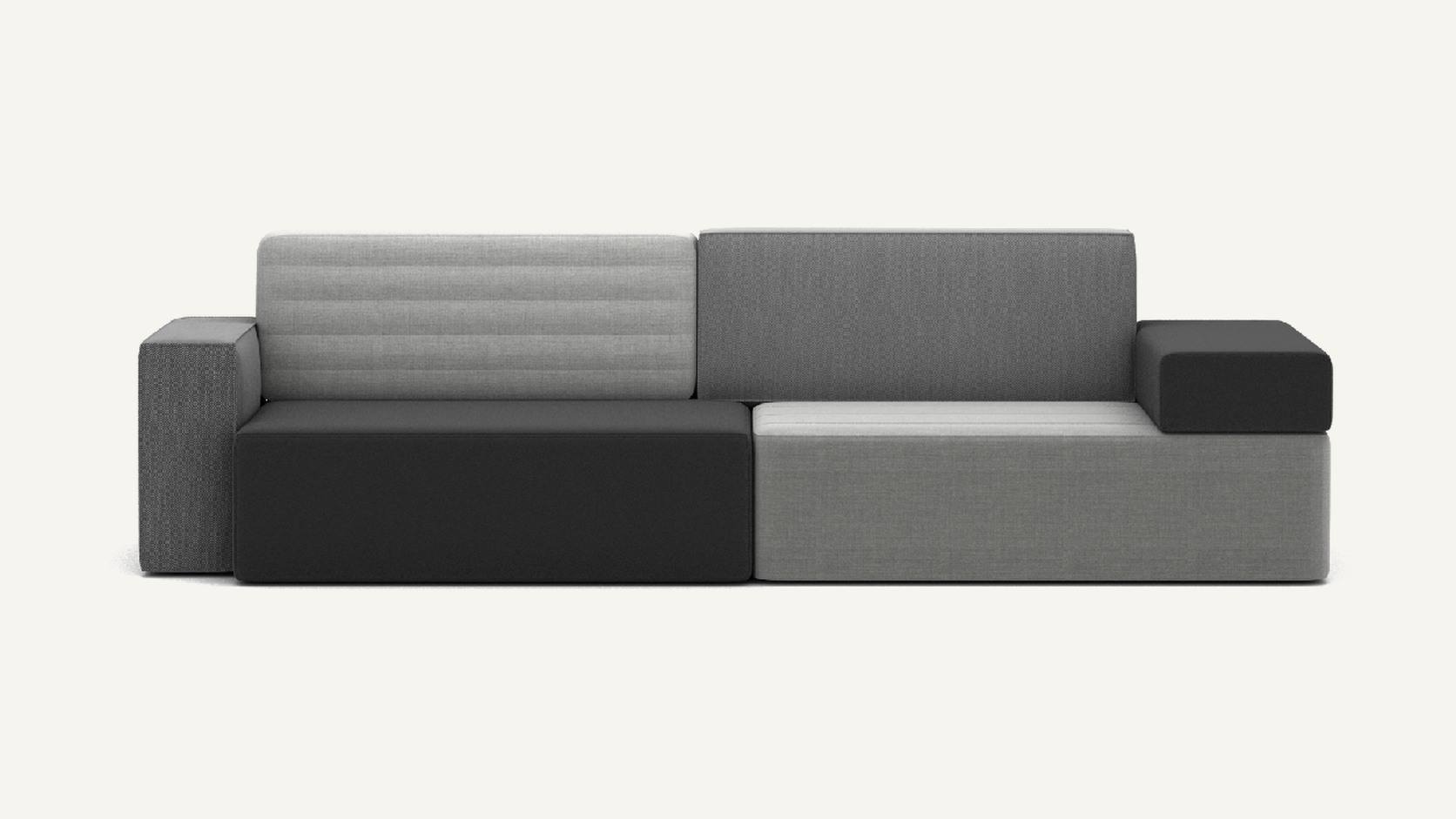
The official record dates Combo Sofa to 2018 and describes a modular upholstered system capable of extension and splicing. Its identity is therefore not limited to one fixed outline. Individual volumes can be repeated and joined so that the sofa responds to a room and the number of people using it.
The visual language remains restrained. Seats, backs and arms read as substantial blocks rather than thin shells. Differences in height and upholstery create rhythm without needing ornamental detail. The system can appear calm precisely because the modules remain legible.
Modularity changes the product boundary
A conventional sofa is bought as a defined object. A modular sofa also includes rules for combination. The product boundary expands from one piece to the relationship between pieces: how modules align, how corners are handled and how an arrangement changes with the room.
The public source identifies leather, wool and fabrics among the material options, but current upholstery, dimensions, connectors and ordering configurations require confirmation through the active official channel. ChinoMuse has not inspected the connection system or assessed long-term wear.
Middle Chair returns to the single object
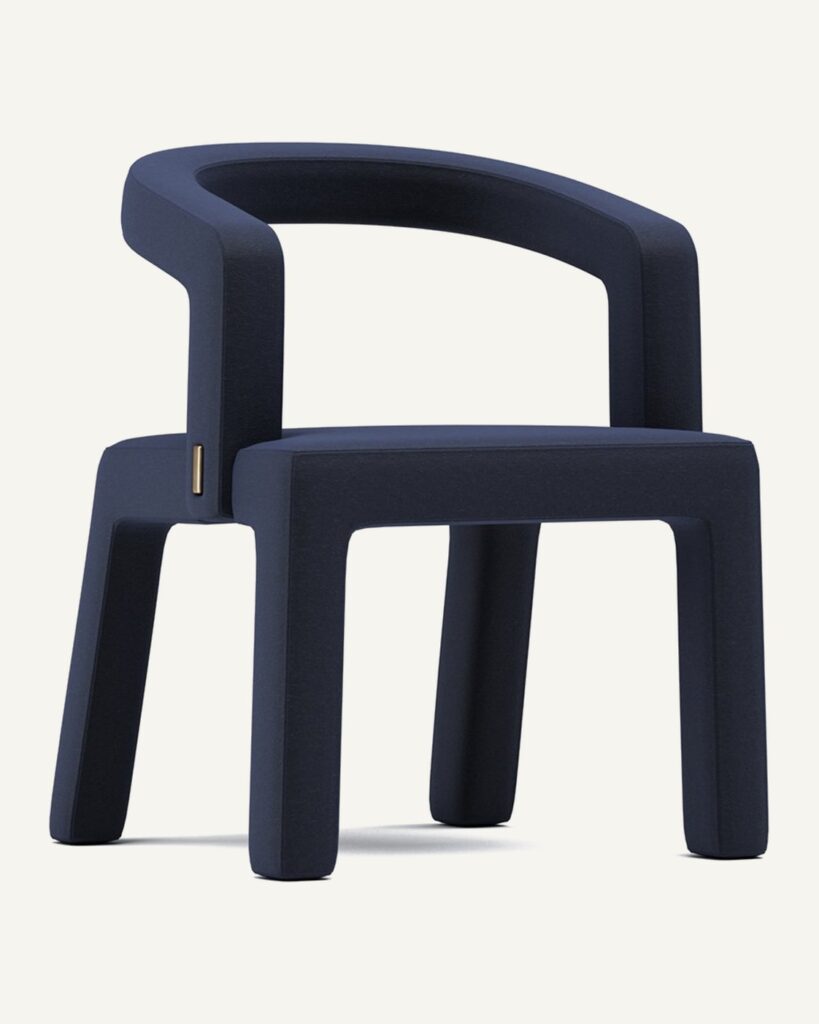
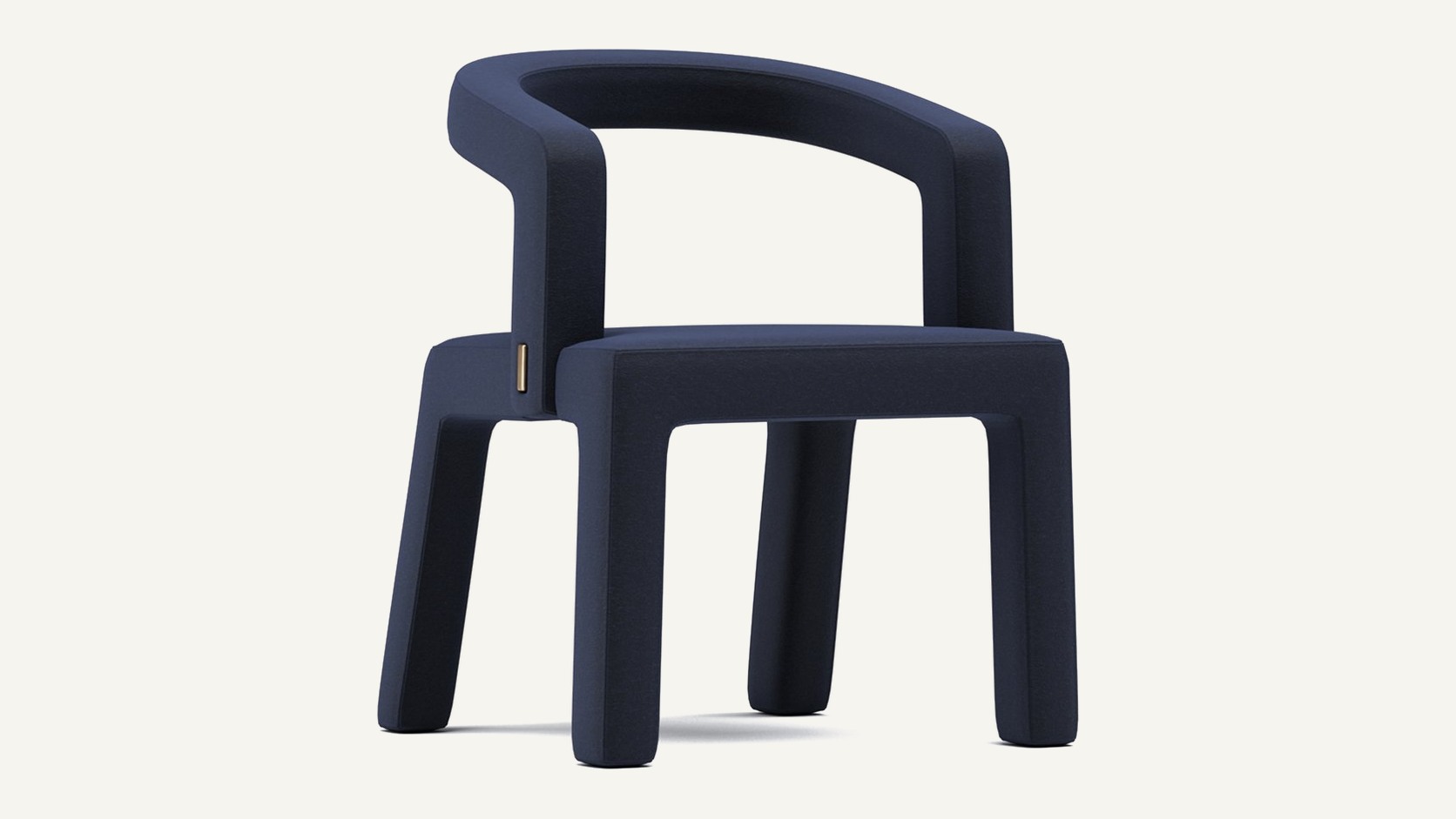
Middle Chair, also dated 2018 in the official collection, shifts attention from a system back to one seat. Its continuous wooden frame, open rear structure and separate upholstered planes make construction visible without turning the chair into a technical diagram.
The arms extend from the front legs and frame the body while leaving space around the back. Upholstery softens the seat and back, but the wood remains the organising line. The chair can stand independently in a room rather than disappearing into a larger modular composition.
Restraint is not the absence of decisions
The Middle Chair’s quiet appearance depends on proportion: the angle of the back, the relationship between arms and seat, and the amount of open space inside the frame. These details are visible in the official imagery but cannot establish comfort, load performance or joinery durability.
Those qualities require physical and technical evidence. A source-led design reading can describe the intended relationship of frame and upholstery while leaving experiential claims unresolved.
Flow Side Table changes the material argument
Flow Side Table, dated 2024 in the official record, introduces ceramic firing and glaze into a collection otherwise dominated here by upholstery and wood. Its stacked square geometry resembles a compact industrial artefact, while the surface carries variations associated with ceramic production.
The table is not simply a smaller version of the seating. It adds density, reflectivity and a different kind of edge to an interior. The object can sit beside upholstered volumes yet retain a distinct material presence.
Craft is made visible through controlled form
A highly irregular form can announce that it was handmade, but Flow Side Table takes another route. Its geometry is controlled enough to foreground the fired surface. Variations in glaze become readable because the silhouette is comparatively strict.
That balance connects industrial repeatability with craft variation. It does not prove that every delivered table will match a photographed finish. Current glaze, colour, dimensions, availability and care requirements must be confirmed with the official source.
Three products produce three spatial roles
Combo Sofa organises a larger zone. Middle Chair marks an individual place. Flow Side Table creates a nearby surface and material accent. Their differences matter more than forcing them into one visual family.
Together they show how a collection can remain coherent through proportion and restraint while allowing different structures and materials to lead. Coherence comes from editorial discipline, not identical shapes.
Between object and interior
The phrase describes a practical design territory. Furniture must be resolved as an object, with joints, surfaces and dimensions, but it is judged inside a larger composition. A modular sofa makes that relationship explicit; a chair negotiates personal and room scale; a side table connects use with material character.
Frank Chou’s selected records suggest that the collection does not treat the room as neutral background. The surrounding interior is part of the design problem, even when the final product remains a clearly bounded object.
What the public record does not establish
The cited pages establish product names, dates, intended material language and official descriptions. They do not establish sales volume, current stock, project use, comfort, durability, stain resistance, delivery, warranty or the exact configuration available in every market.
ChinoMuse has not interviewed Frank Chou, received samples, visited production or physically assessed these products. Inclusion does not imply partnership, sponsorship or endorsement. Where the story interprets relationships among the objects, that interpretation remains separate from manufacturer information.
A collection read through differences
The most revealing connection between Combo Sofa, Middle Chair and Flow Side Table is not a shared motif. It is their distribution of responsibility. One product creates a system, one concentrates on the occupied object and one gives material process a compact architectural presence.
Explore the FRANK CHOU COLLECTION profile, Combo Sofa, Middle Chair and Flow Side Table. The individual records preserve their cited sources, current limitations and exact product context.