
The most important moment in a camera bag may be the moment when the camera is no longer inside it. Protection matters during transit, but photography begins when an object can be reached, secured in the hand and moved into position without disturbing the rest of the load.
That transition has become a distinct design problem. Camera backpacks use side openings and removable inserts. Strap clips keep a camera outside the main compartment. Compact supports fold into handles, tripods and edge-mounted positions. Together they reveal a broader shift: creator gear is increasingly organised around sequences rather than isolated features.
The bag was once treated mainly as storage
Traditional equipment luggage was easy to understand. A padded container separated lenses and bodies, closed securely and protected them between locations. Access occurred when the case reached a stable surface and opened completely.
Contemporary creators often work across less predictable settings. A camera may move from train to street, from a desk to a short interview, or from a backpack to a compact support several times in one hour. Storage still matters, but it is only one stage in a repeating cycle.
Access becomes part of the interface
An opening is not empty space. Its position determines which hand reaches the camera, which objects remain covered and whether the bag must leave the body. Zip direction, divider placement and the orientation of the camera grip all influence the action.
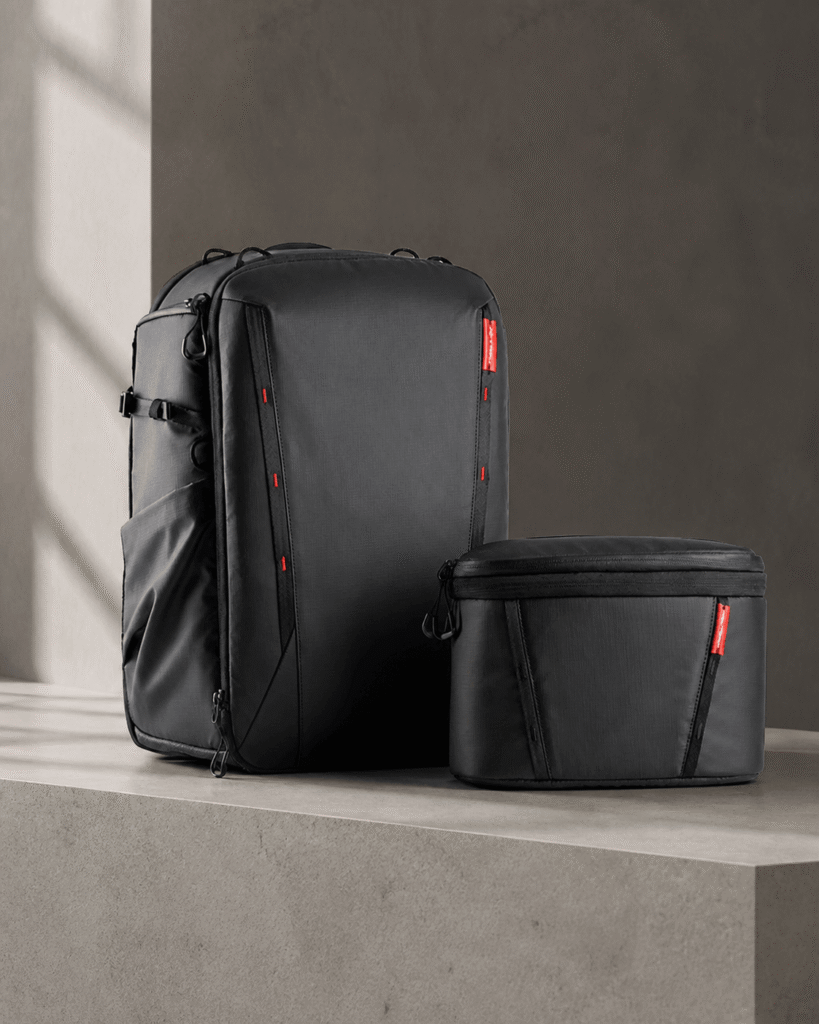
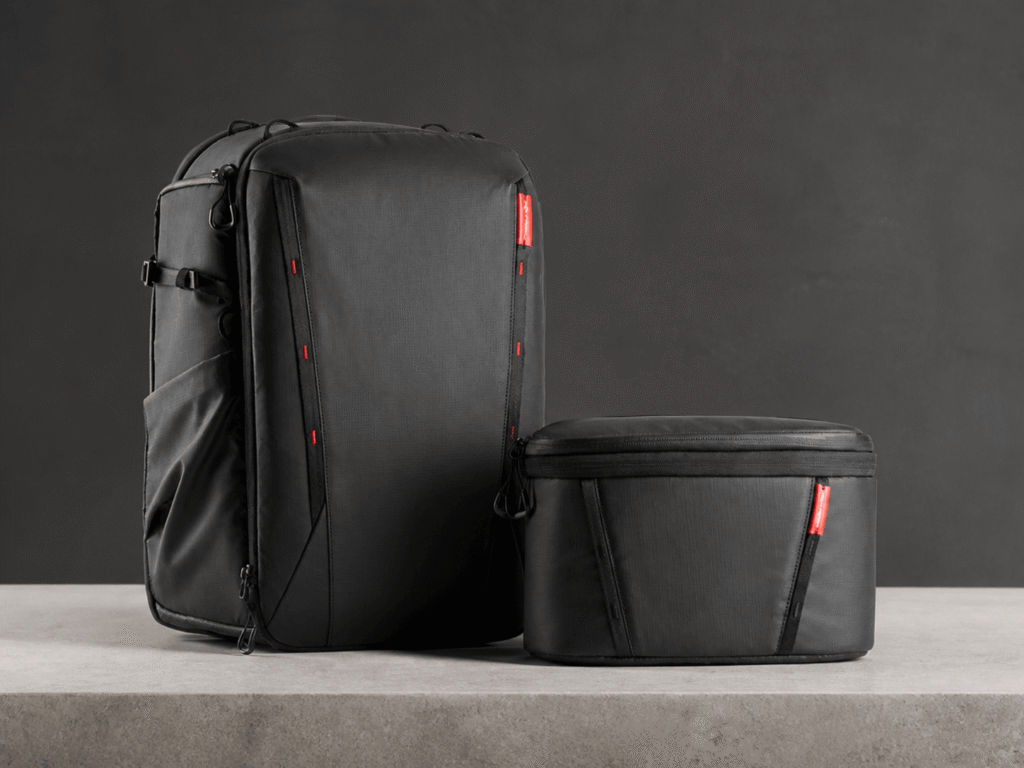
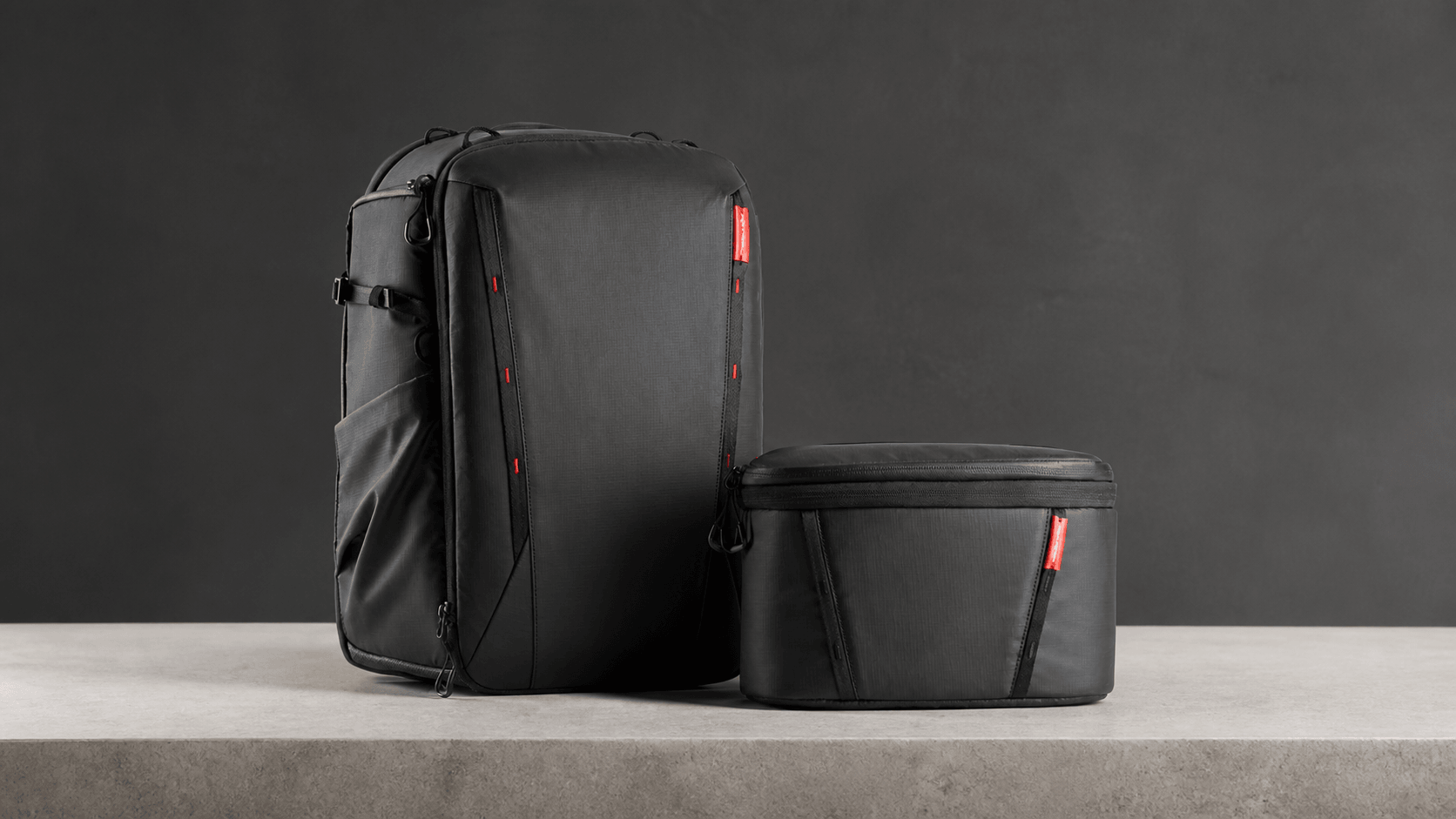
The PGYTECH OneMo 2 Backpack 25L makes this interface visible through two right-side access points, configurable partitions and a removable shoulder bag. The official specification establishes those elements. It does not establish that they are equally convenient for every body, camera or working style.
A removable bag changes the scale of the kit
OneMo 2 can divide its carry system into a main backpack and a smaller shoulder bag. This is not simply extra storage. It lets the kit change scale after arrival: the full system can transport equipment, while a selected subset can leave the main load behind.
That modularity introduces its own decisions. The creator has to choose which items move into the smaller bag, whether the transfer happens before the assignment and how the remaining equipment stays protected. Modularity is useful because it creates options, but options still require a routine.
The clip moves access outside the bag
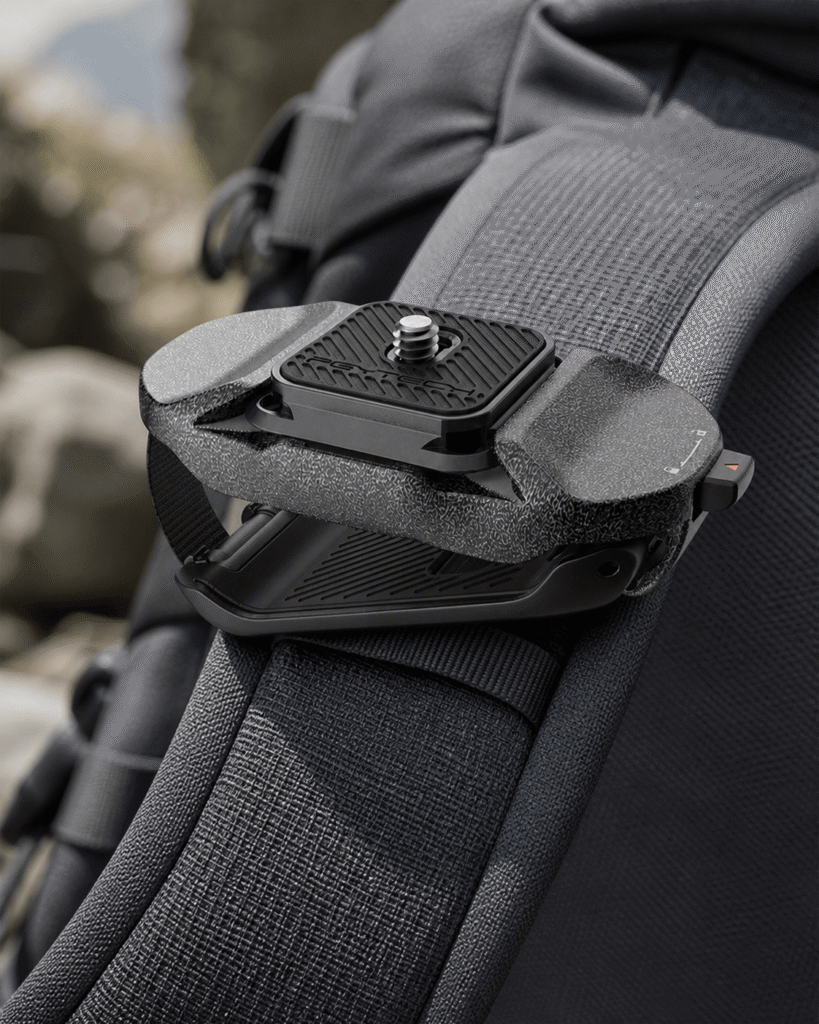
A strap-mounted clip makes a more radical change. Instead of improving an opening, it keeps the camera at the edge of the carrying system. The PGYTECH Beetle Camera Clip V2 attaches to a compatible strap and uses a plate interface to release the camera.
The design shortens the path between carrying and holding. It also transfers responsibility to the connection among strap, clamp, plate and camera. The official strap dimensions and plate description matter because the clip is not an independent object once it is in use; it is one link in a load-bearing chain.
Quick access is a negotiation with security
Every reduction in access time changes how equipment is secured. A zipped compartment adds steps but encloses the camera. An external clip removes some steps but leaves the equipment exposed to movement, weather and contact.
The design question is not whether speed or protection wins. It is where each belongs in the sequence. A camera can travel inside the bag, move to the clip during an active period and return to enclosed storage before transport resumes. The gear becomes more useful when the user knows when to change states.
Compact support extends the sequence
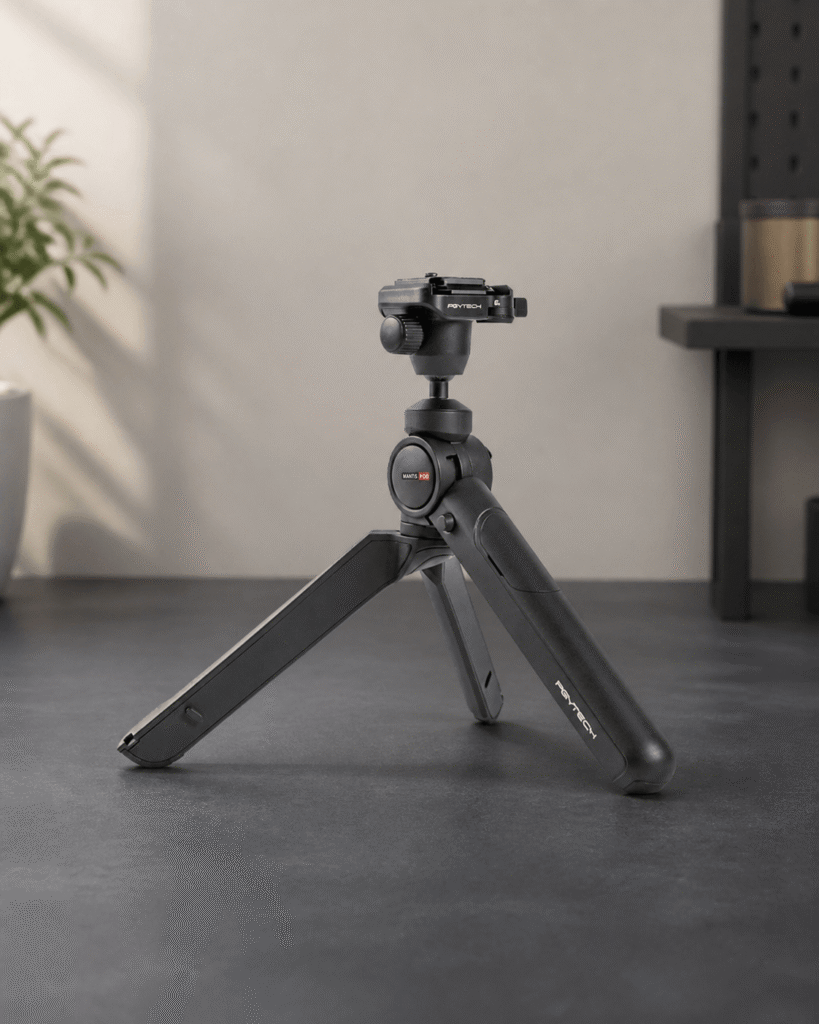
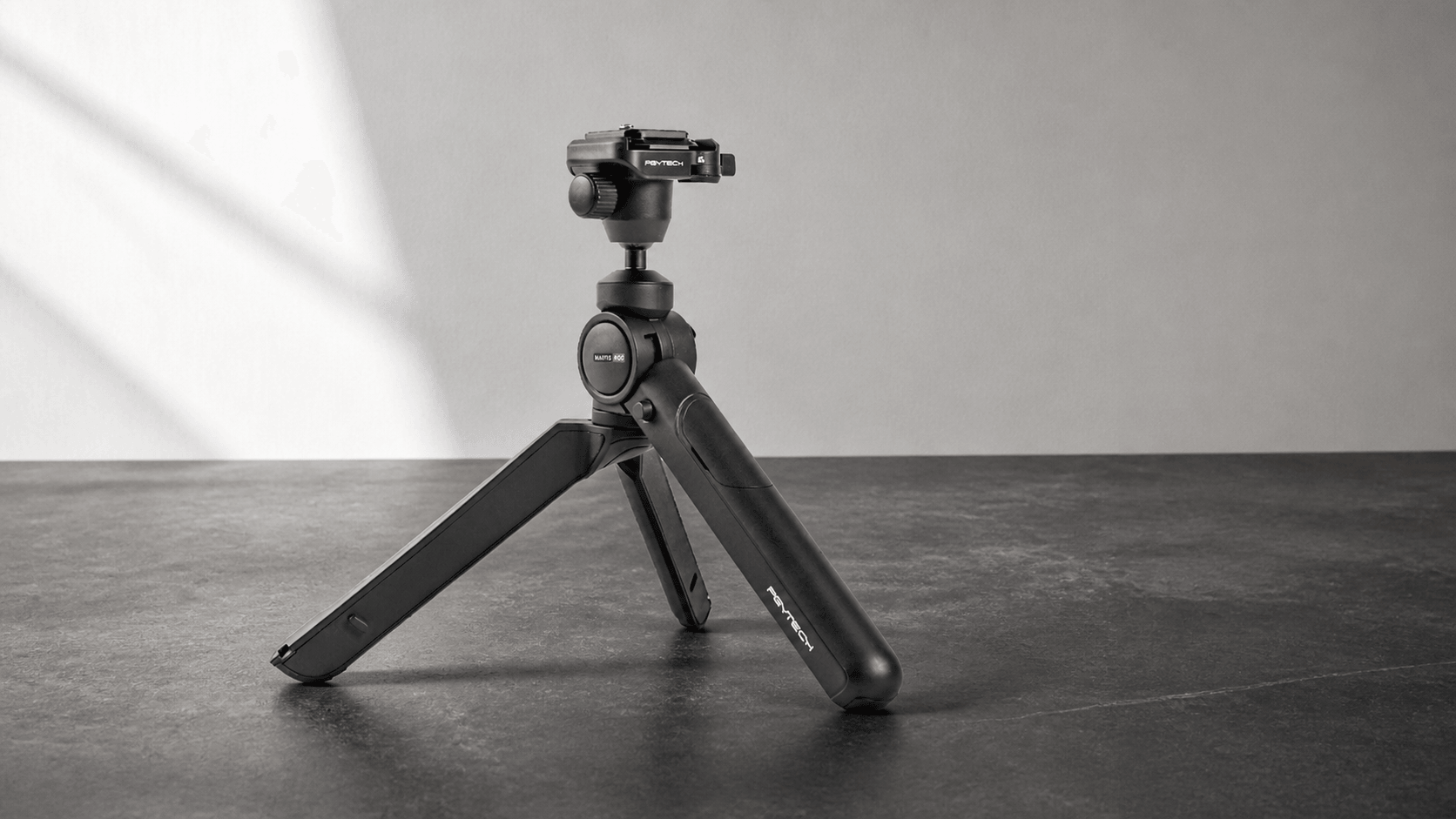
Reaching the camera is not always the end of setup. A stable position may still be needed for self-recording, a locked frame or a longer exposure. The PGYTECH MantisPod 2.0 compresses a handheld grip, tabletop support and several articulated positions into one compact object.
Its value in this story is not a claim about performance. It is the way the product occupies the next step after access. Bag, clip and support describe a progression: protect the equipment, bring it into the hand, then establish a position.
Interfaces make the products a system
These products are connected less by appearance than by interfaces. A bag presents straps and attachment areas. A clip requires a strap within specified limits and a compatible plate. A support receives a camera through a screw and quick-release geometry.
Interfaces are where convenience can fail. “Arca-type,” “quick release” and “compatible strap” are categories, not universal guarantees. Tolerances, plate shape, screw position, strap thickness and the centre of gravity all need to be checked with the exact equipment.
Movement changes the meaning of load
A static load test is not the same as a camera moving on a walking body. Acceleration, impact and repeated vibration can stress a strap or connection differently from a controlled laboratory condition. The creator also moves through crowds, doorways and uneven terrain.
This is why a published maximum load should remain contextual. It can help identify the manufacturer’s stated limit, but it does not replace an inspection of the whole attachment system before each use.
The visual language follows the workflow
PGYTECH’s selected products use dark technical surfaces, restrained red details and compact mechanical interfaces. The visual continuity helps the range read as one ecosystem, but the deeper continuity is behavioural. Each object controls a transition that creators repeat.
The backpack opens and divides. The clip locks and releases. The support folds and articulates. These verbs explain the products more clearly than broad claims of professional performance.
Creator gear is becoming scenario-specific
The rise of short-form video, small production teams and mobile editing has expanded the range of places where equipment is used. A creator may need a camera for only part of a journey, or may switch between handheld and supported framing without building a conventional set.
Products designed for these scenarios do not eliminate preparation. They relocate it. Divider layouts are planned in advance, plates are mounted correctly, straps are checked and the safe operating position of a compact support is understood before the moment arrives.
What quick access cannot solve
Faster access cannot confirm camera compatibility, guarantee comfort or make an unstable surface safe. It cannot decide which lens belongs in the active position or whether external carry is appropriate in rain or a crowded train.
The strongest systems make constraints visible. They provide adjustment and clear interfaces while leaving the user able to return the equipment to a more protected state when the scenario changes.
Reading the products as a sequence
Seen separately, OneMo 2 is a backpack, Beetle V2 is a clip and MantisPod 2.0 is a compact support. Seen together, they form a study of time: how long it takes to move from transport to readiness, how many connections must be checked and how easily the system returns to carry.
This way of reading creator gear is useful beyond one brand. It shifts attention from the largest specification to the transitions that happen most often. A product earns its place when it makes those transitions clearer without hiding the new responsibilities it introduces.
Editorial scope
This independent story is based on PGYTECH’s current public brand and product information checked on 12 August 2026. ChinoMuse did not interview the company and has not physically tested, carried or mounted equipment with the featured products. Product dimensions, load statements, compatibility and operating limits remain attributed to PGYTECH. Inclusion does not imply partnership, sponsorship or endorsement.