
WUU’s range does not settle into one familiar product category. A small reading lamp, a glass-topped table and a hollow vessel belong to different rooms and routines, yet their design logic remains recognisable. Metal is shaped so that a joint, edge or removed volume stays visible. Glass exposes structure. Light is controlled through touch and rotation. The domestic object becomes legible through the way it is made.
This story reads three official WUU records together: the T Reading Lamp, Logic Coffee Table family and SHELL Object Series. It is based on cited public information, not an interview, studio visit or physical assessment. The aim is to examine the continuity between the objects without inventing a single manifesto for the brand.
A brand organised around objects rather than one category
WUU states that it was founded in 2014 and works across furniture, lighting and objects. That breadth can make a catalogue feel fragmented, but the representative products point to a consistent interest in controlled geometry and manufacturing detail. The useful comparison is not between lamp and table as competing products. It is between the decisions that make each structure understandable.
The T Reading Lamp compresses adjustment into a compact aluminium body. Logic makes its support visible under tea-coloured glass. SHELL turns a diagonal cut and hollowing process into the identity of several vessels. Each object reduces visual noise while allowing one constructional idea to carry the design.
The T Reading Lamp makes adjustment visible
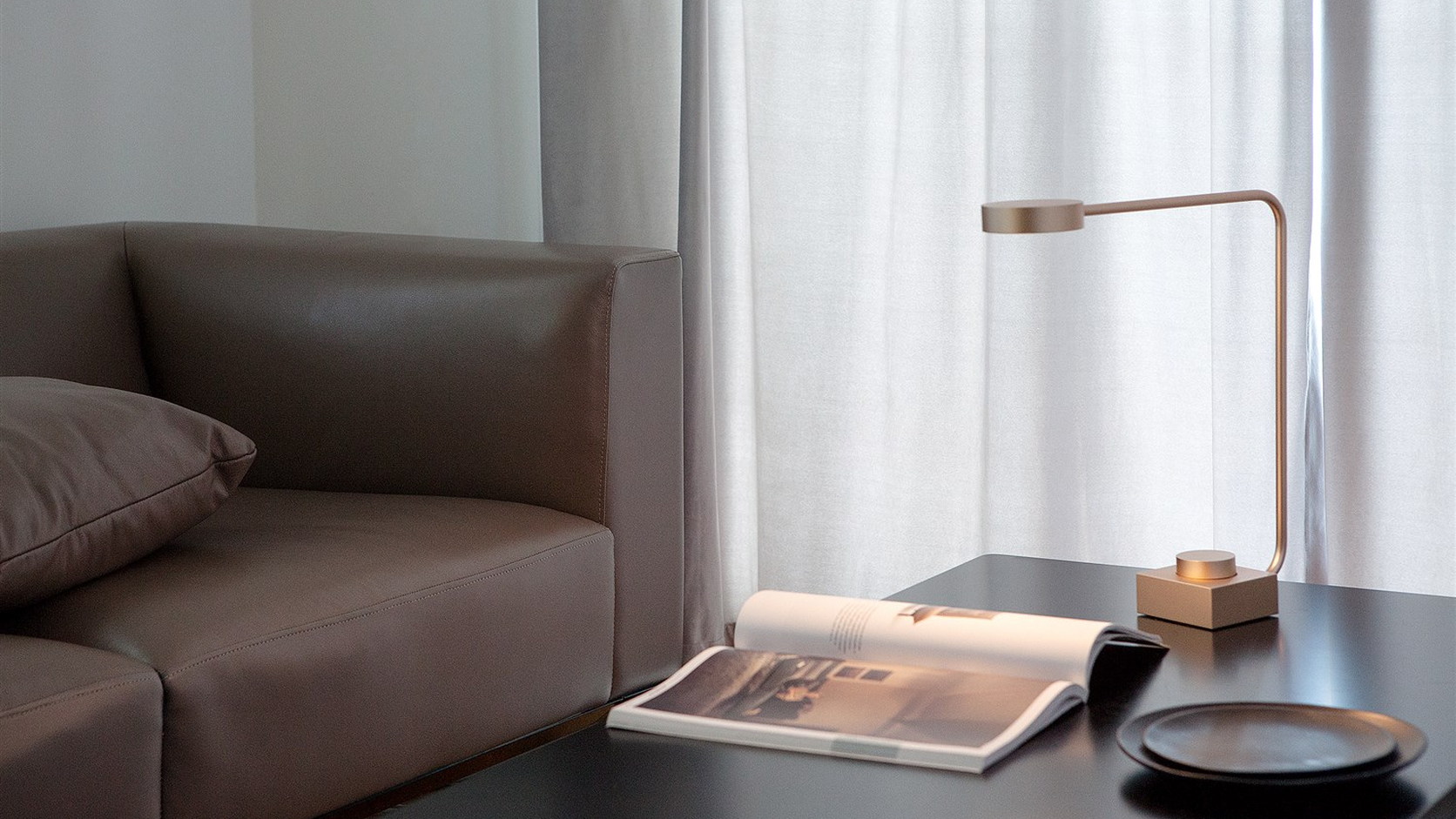
The T Reading Lamp is documented as an aluminium desktop light with an anodised finish, touch control and a manufacturer-listed 2700–6500K colour-temperature range. WUU lists a 0–7W brightness range, 100–240V AC input and a 5V output record. Those specifications establish product identity; they do not establish measured illumination, flicker or colour accuracy.
Its visual argument lies in the continuous curve of the upper section and the relationship between base, stem and light head. The object does not present a conventional shade attached to an unrelated stand. Adjustment appears to belong to the body. Touch and rotation become part of how the lamp is read even before they are used.
Light is treated as a material boundary
A reading lamp is partly a solid object and partly the light it distributes. WUU’s published intention connects fine changes in light with the precision of touch and rotation. That language is important because it describes what the design seeks to stage, not what ChinoMuse has independently measured.
In a room, the relevant questions remain practical: screen reflection, dominant hand, cable route, surface depth and regional power configuration. The lamp record makes those questions more specific without turning the profile into a performance endorsement. The object’s restraint depends on integration, but suitability still depends on placement.
Logic exposes the support beneath the surface
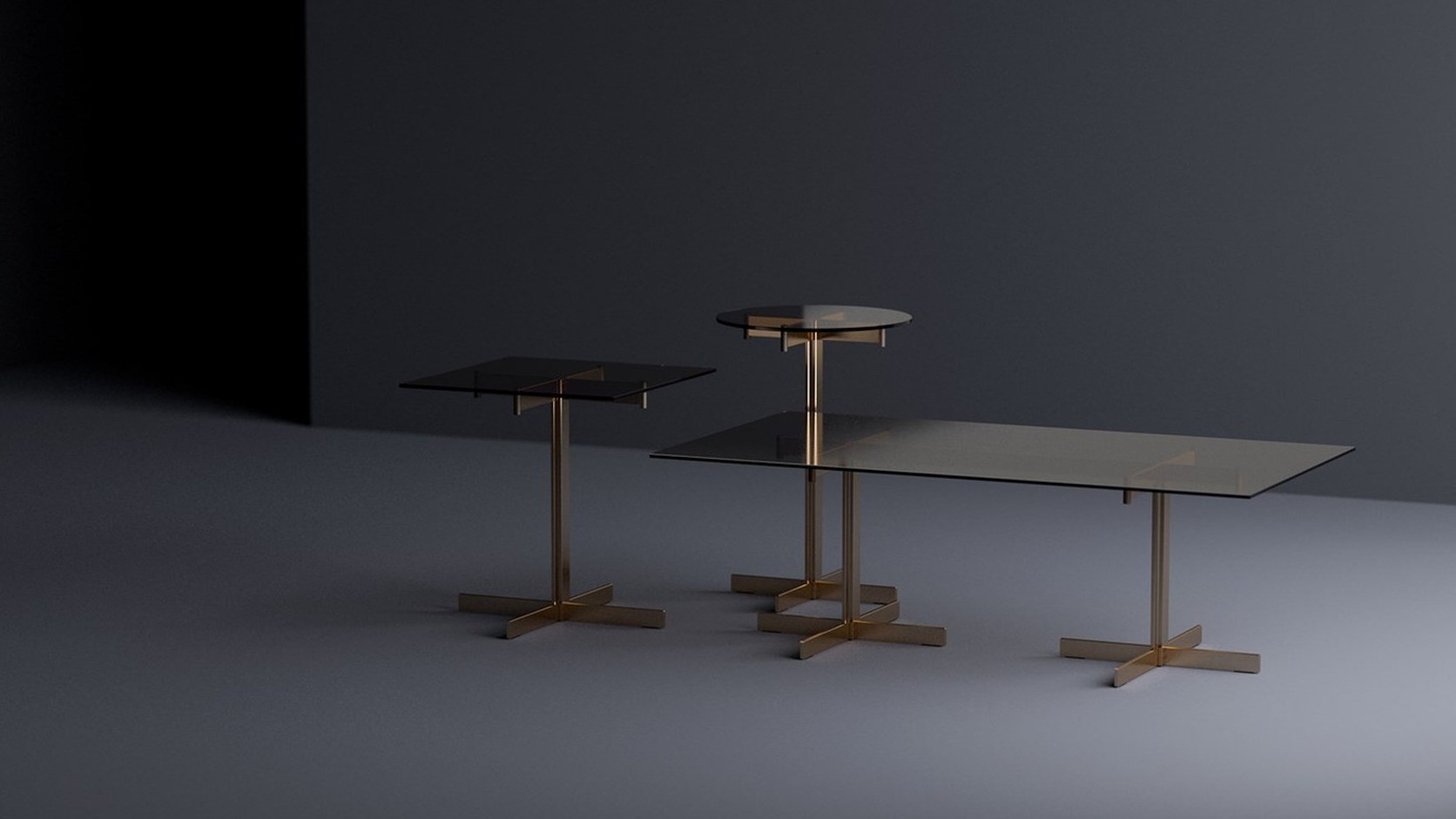
The Logic Coffee Table is presented as a three-format family. WUU describes vertical, parallel, intersecting and separated metal volumes joined into a precise support. An 8mm tea-coloured tempered-glass top allows that structure to remain visible. Stainless-steel legs and aluminium-alloy connector columns receive a gold PVD surface.
The table therefore reverses the normal hierarchy between top and base. A solid surface might hide the joints; tinted glass keeps them in view while softening their contrast. The gold appearance ties separate elements together without pretending that every component is the same material.
Glass turns construction into the subject
Transparency does more than make a table look lighter. It changes what the user sees through and beneath the object: floor, rug, support, stored items and reflection. The Logic family uses that condition to make structure central. The table’s identity is not an applied motif but the arrangement holding the glass plane.
That clarity also creates obligations. Exact dimensions, variant, edge condition, assembly, load guidance, floor protection and replacement glass must be confirmed for the selected format. ChinoMuse has not assembled or loaded a Logic table, verified its glass certification or assessed the PVD finish over time.
SHELL begins with removal rather than addition
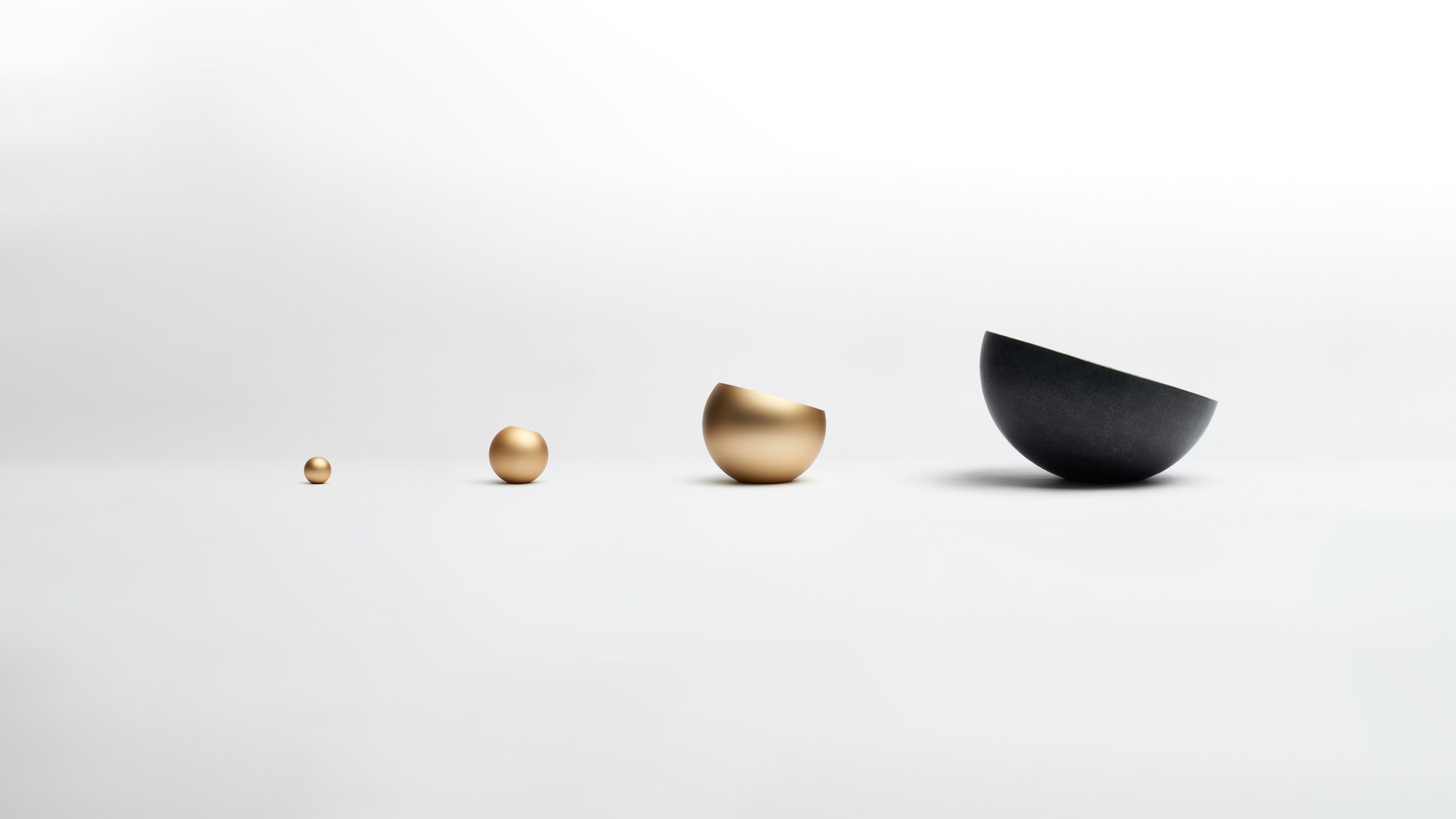
The SHELL Object Series uses a consistent diagonal cut across aluminium and marble forms. WUU describes CNC cutting and hollowing from solid material, with anodised aluminium for variants A, B and C and marble for variant D. The removed volume creates the opening, capacity and use.
That subtractive approach allows several functions to emerge without making every piece universal. Depending on form and scale, official descriptions connect the series with incense, flowers, fruit or small desktop objects. A shallow metal form and a deeper stone vessel share a family resemblance, but they should not be assigned the same care, stability or liquid-holding assumptions.
Material difference remains visible
WUU does not erase the distinction between aluminium, stainless steel, glass and stone. Aluminium can be cut, hollowed and anodised; stainless steel supports a table; glass reveals that support; marble preserves natural variation and weight. The common design language comes from geometry and treatment rather than making unlike materials imitate one another.
This matters in contemporary domestic design because material honesty is often reduced to a surface mood. Here the published processes help explain why an object has a particular edge, reflection or mass. The record remains incomplete without physical inspection, but it gives readers a more disciplined way to distinguish material fact from visual impression.
Three scales, one demand for precision
The lamp operates at the scale of hand, book and light. The table works at the scale of seating and circulation. SHELL works at the scale of a flower, incense stick or small collection. Across those scales, precision is not a decorative claim; it is expressed through the alignment of parts and the control of openings.
The products also show why a representative brand selection should include more than one category. A single lamp could suggest that WUU is primarily a lighting brand. A single table could reduce the story to furniture. Reading all three reveals how an approach to geometry travels between room, surface and hand.
What the records do not establish
Official pages establish the identities, materials and published specifications cited here. They do not establish durability, comfort, measured lighting quality, joint tolerance, glass strength, water resistance, heat behaviour or after-sales service in every market. The WUU site also presented a certificate-validity warning during verification, so current availability and support require direct confirmation.
ChinoMuse has not visited WUU, interviewed its team, handled these objects or received samples. Inclusion does not imply partnership, sponsorship or endorsement. This distinction keeps the editorial interpretation separate from facts that a reader can check at the listed first-party sources.
Reading WUU through the objects
WUU’s domestic design is most convincing when read through the decisions that remain visible: the curve that carries light, the glass that exposes a table support, and the diagonal cut that turns solid material into a vessel. None of those decisions needs an added emblem to connect the range.
Explore the WUU brand profile, T Reading Lamp, Logic Coffee Table and SHELL Object Series. Together they document a contemporary Chinese brand treating domestic objects as structures to be understood, not only images to be consumed.


