A space-saving dining table is not simply a small table. It has to make room for meals, chairs, movement and the moments between uses. A model that looks compact when photographed may still block a passage when opened, demand an awkward folding sequence or leave nowhere practical for the chairs.
This guide uses two current ziinlife records to explain a broader decision method. It is a source-led comparison framework rather than a product ranking. ChinoMuse has not physically tested either table, so stability, finish, mechanism feel and long-term wear must be checked before purchase.
1. Begin with the room pattern
Draw the room before choosing a table. Mark doors, cupboards, radiators, windows and the route people use to cross the space. Then identify when the dining surface is needed: every evening, only at weekends, or as a secondary work surface during the day.
The right table supports that sequence. In a narrow room, a fixed compact table may be easier than a folding model that needs clearance on both sides. In a multi-use room, the ability to reduce the table between meals may matter more than maximum seating.
2. Measure open, closed and transition footprints
Record three footprints rather than one. The open footprint covers the table when ready for dining. The closed footprint shows the space it occupies when reduced. The transition footprint is the clear area required while leaves, panels or legs move.
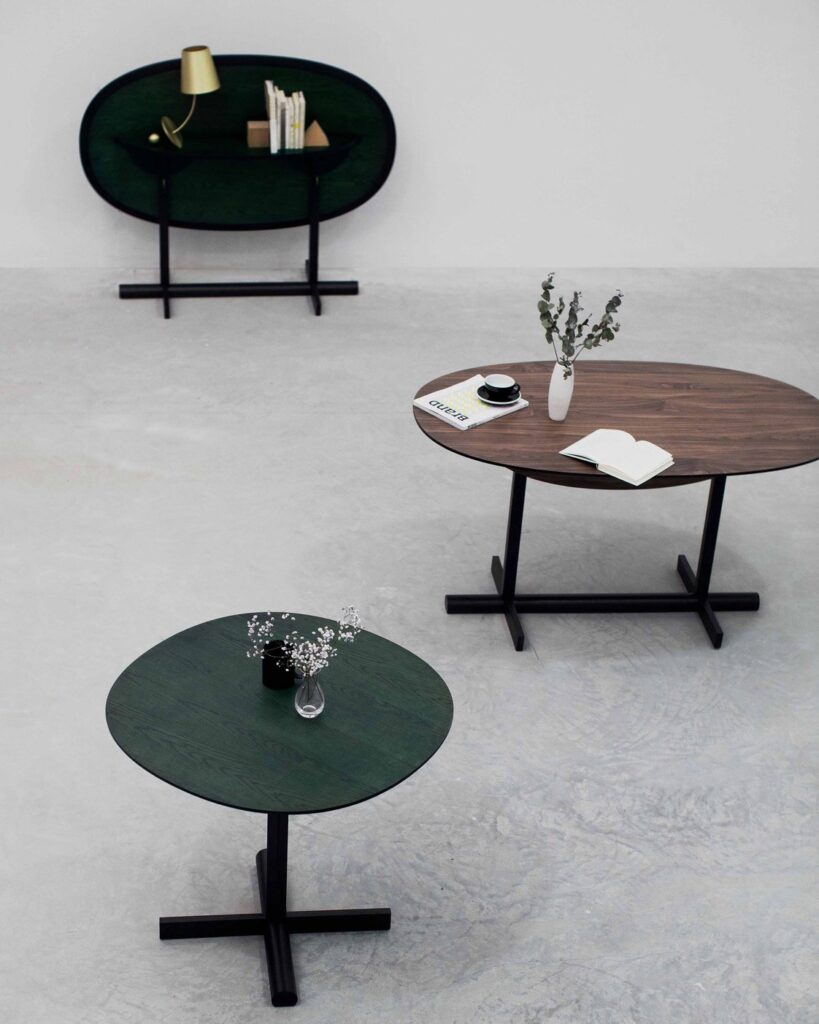
The ziinlife Tree Folding Table is listed in a small 80 × 80 × 73cm version and a large 139 × 80 × 73cm version. Its official presentation shows dining, partially folded and upright folded states. Those states are useful only if the room can accommodate the movement between them.
3. Add chair clearance to every plan
A tabletop measurement does not include the space needed to pull out a chair or sit comfortably. Add the depth of the actual chairs, then add circulation space behind occupied seats. If a wall or cabinet is close, test the tightest position rather than the most generous one.
Folded furniture can also create a storage problem for chairs. Decide whether the chairs remain around the reduced table, stack elsewhere or become everyday seating in another part of the room. A compact table with four stranded chairs has not fully solved the space problem.
4. Distinguish folding, extending and fixed compact forms
A folding table changes its footprint by moving major surfaces or supports. An extending table increases capacity while retaining a recognisable base. A fixed compact table avoids mechanisms and asks the room to accept one permanent size.
None of these approaches is universally better. Folding suits a room that regularly changes function. Extending suits occasional larger meals when storage for leaves and operating clearance are clear. Fixed compact forms suit frequent use and reduce the number of steps between an empty room and a ready table.
5. Examine the mechanism as part of the furniture
Look for the complete operating sequence in official instructions or a credible demonstration. Identify where hands grip, what supports each state, whether a lock is visible and which parts carry the weight. A mechanism should not be judged from a closed beauty shot.
Ask what happens if the floor is uneven, one panel is loaded first or the table is moved while partly open. These are questions for the maker or seller; ChinoMuse has not verified load limits, pinch protection or resistance to repeated operation for the cited tables.
6. Check stability in every intended state
A table may feel different at minimum and maximum size because the relationship between top, supports and floor contact changes. Review the number and location of legs, any central pedestal and the distance between the support points.
Do not infer stability from visual weight. A broad base can still interfere with feet, while slender legs can be structurally efficient. If the table will support computers, hot dishes or heavy serving pieces, obtain the maker’s current limits and return terms before relying on it.
7. Separate surface material from structural substrate
Material descriptions often combine a visible veneer with a structural panel beneath it. ziinlife lists the Tree Folding Table in oak or walnut, using E0 plywood with veneer. Its Dimension Table combines a sintered-stone top with a plywood base and oak veneer.
These are different constructions with different questions. Veneer needs clear care guidance for moisture, heat and refinishing. Sintered stone raises questions about edge impact, weight and delivery. Ask for the exact finish and substrate of the selected variant rather than treating the family name as a complete material record.
8. Match transformation frequency to effort
A table changed twice a year can tolerate a longer sequence than one changed twice a day. Count the actions: moving chairs, releasing hardware, lifting panels, rotating the surface and restoring the room. Consider whether one person can perform the sequence safely.
The most compact closed state is not automatically the most useful state. A partly folded surface may be the daily setting for one or two people, with the full state reserved for guests. The intermediate condition can therefore be more important than either extreme.
9. Verify seating claims with real place settings
Seat counts vary with chair width, table shape, serving style and the amount of personal space expected. Translate a claimed capacity into centimetres of usable edge per person. Check whether legs, hinges or a central support occupy that edge.
Place settings also need depth. Plates, glasses and shared dishes can make a shallow surface feel crowded even when the chairs fit. For work-and-dining use, include the space needed to move a laptop, lamp or documents before a meal.
10. Plan delivery and assembly before purchase
A transformable table can be easier to live with but harder to deliver. Record packaged dimensions and weight, staircase turns, lift size and doorway clearance. Confirm whether the top and base arrive separately and which tools or installers are required.
Official photographs show the finished object, not the delivery route. Current stock, regional assembly service, packaging, returns and replacement parts must be confirmed through the active seller for the destination.
11. Check care, repair and replacement parts
Moving furniture contains contact points that can loosen or wear. Ask whether hinges, fasteners, glides and locks are standard or proprietary, and whether care instructions address them. A damaged mechanism can affect the entire purpose of a space-saving table.
For the surface, confirm cleaning products, heat protection and the response to scratches or stains. A finish that suits occasional dining may not suit daily work, children’s activities or repeated movement of equipment.
12. Compare two different design strategies
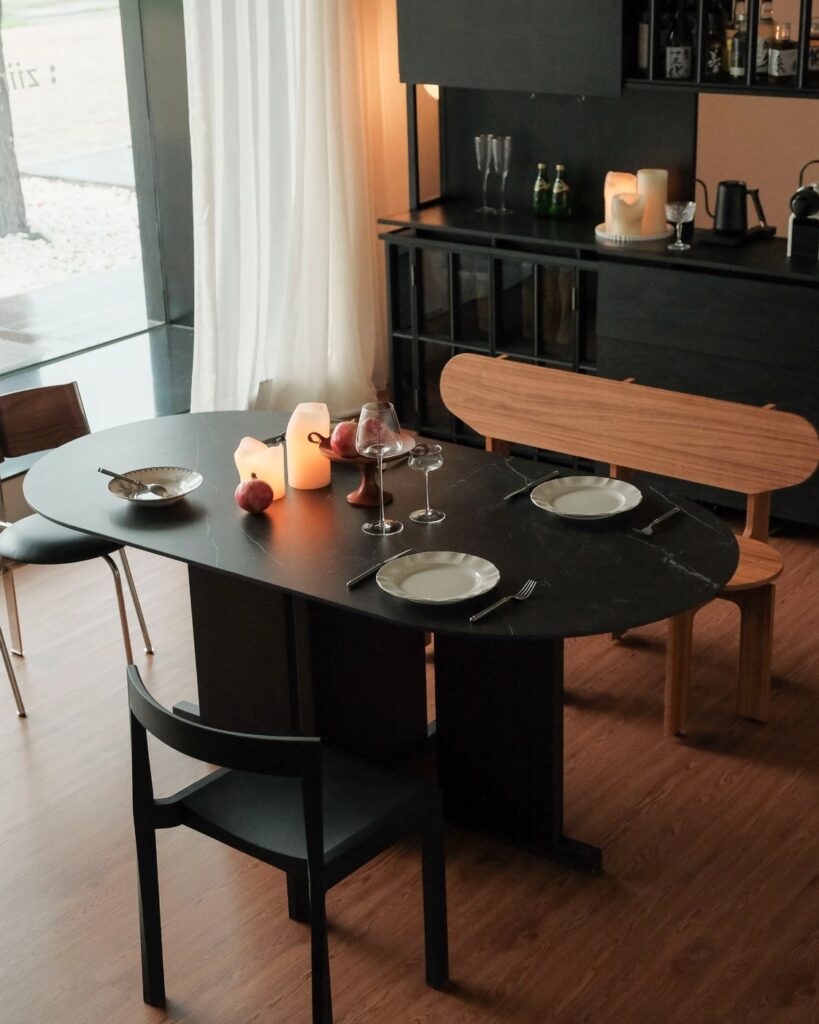
Tree treats transformation as the central idea: the furniture changes its physical role and visual presence. Dimension is a fixed dining table offered in several sizes—140 × 80, 160 × 91 and 180 × 91cm in the cited listing—and uses a sculptural base beneath a stone top.
The comparison is useful because it prevents “space-saving” from becoming a synonym for folding. A correctly sized fixed table may waste less time and movement in a room where dining is frequent. A folding table can release much more floor area where the room has several daily roles.
A concise decision record
- Room: fixed obstacles, circulation and the daily sequence.
- Footprints: open, closed and the area needed to transform.
- Chairs: occupied depth, pull-out clearance and storage.
- Mechanism: actions, locks, support points and current limits.
- States: which size is used most often, not only the extremes.
- Materials: surface, substrate, finish and care instructions.
- Capacity: usable edge and depth for real place settings.
- Delivery: package, access, assembly and return route.
- Maintenance: hardware, glides and replacement parts.
Choose the room sequence, not the smallest footprint
A successful space-saving table makes the room easier to change without making dining harder. The strongest decision is based on measured movement, honest use frequency and verified construction—not the smallest number in a product listing.