

An everyday bag has to perform a quiet sequence of tasks: accept the objects you carry, open when you need them, sit where you expect on the body and remain manageable through a long day. Online, however, the first evidence is usually a carefully framed photograph. That makes the buying problem less about finding the most striking image and more about translating public information into a realistic use case.
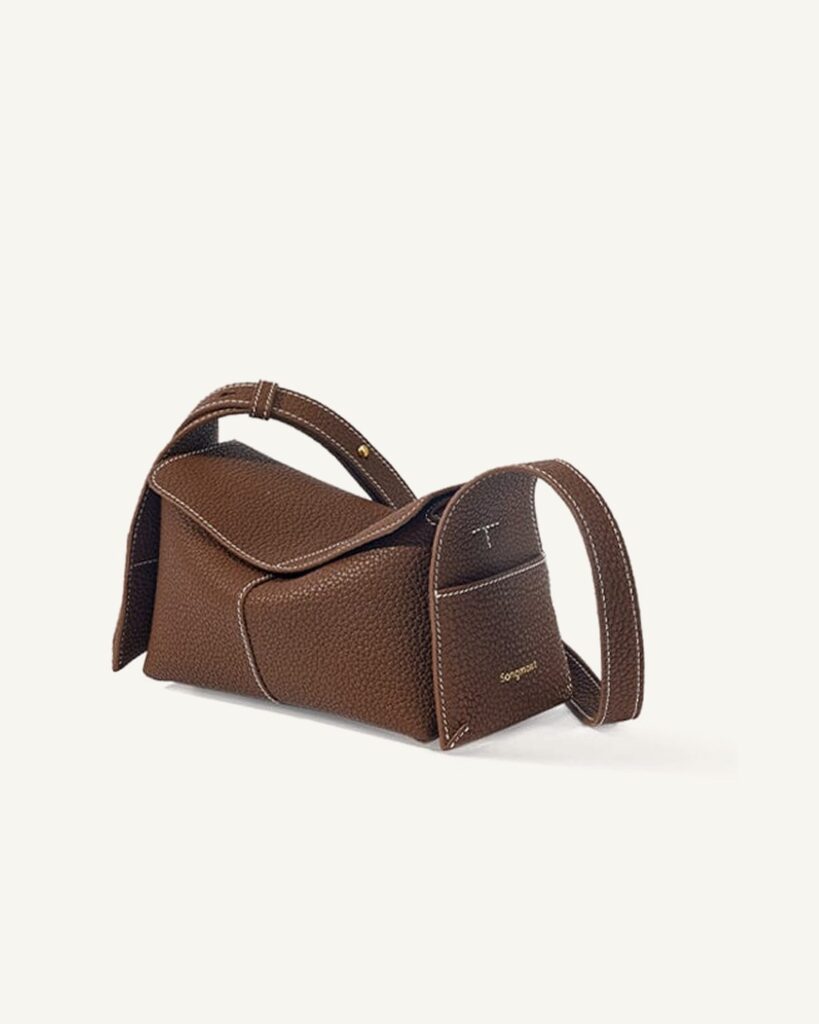
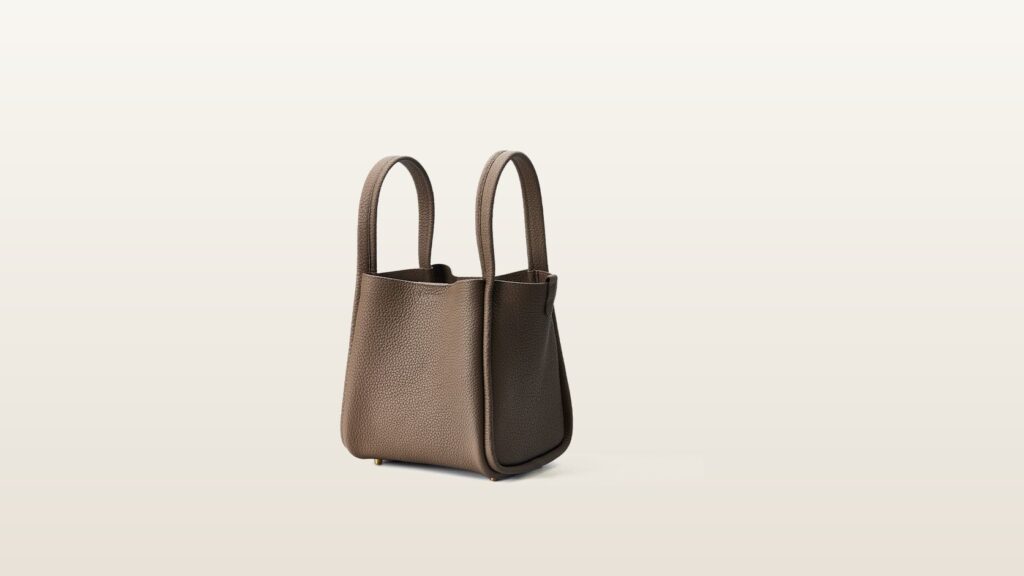
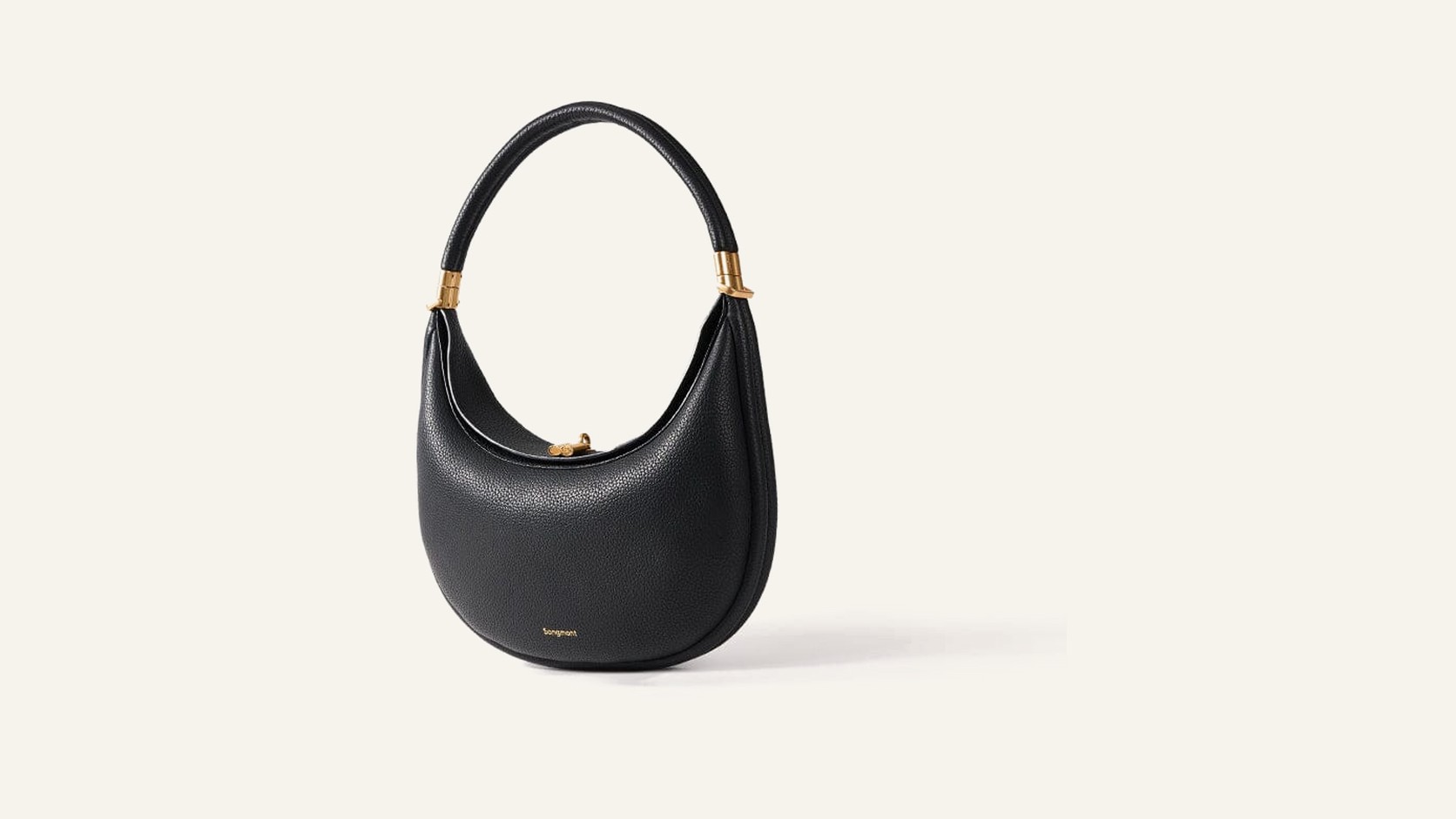
This guide uses the Songmont Luna Bag, Medium Song Bag and Mini Drippy Roof Bag as three documented examples. They represent a crescent, a rounded open volume and a compact roof-like form. The aim is not to rank them or report physical experience. It is to show which questions can be answered from an exact official record, which require measurement at home, and which remain unresolved until a buyer handles the selected version.
1. Define the job before choosing a shape
Begin with one ordinary day rather than a general wish for “enough space.” List the largest rigid item, the objects that must be reached quickly and anything that should remain separated. A phone, keys, glasses case, small bottle, tablet and folded umbrella each place a different demand on the opening and interior. Also note whether the bag will accompany a commute, an evening out, air travel or several of those situations.
Then identify the usual carry position. A close shoulder carry, longer crossbody drop and handheld position do not use the same strap length or distribute the bag in the same way. This short brief gives product information a purpose. Without it, a buyer is likely to compare attractive silhouettes while postponing the practical decisions until after delivery.
2. Verify the exact product, size and version
A family name is not a specification. Songmont lists related Luna products and several Song sizes, while “Mini” is part of the official Mini Drippy Roof Bag name. A material, strap range or interior detail shown for one record should not be transferred to another merely because their names or outlines are similar.
Record the exact title, colour, size and active regional URL before comparing. Save the stated material, weight, strap range, closure and lining next to that version. Recheck the cart or confirmation page before ordering because a colour selector can change a SKU and a regional storefront can show different availability or terms. ChinoMuse’s guide to reading a Chinese brand product page explains this identity-first method in more detail.
3. Read silhouette separately from usable volume
A bag’s outer outline tells you how it relates to the body and clothing, but it does not fully establish what fits inside. A crescent can taper at its ends. A rounded body can look generous while an internal pouch or narrow mouth shapes its useful space. A compact angular form can have a clear identity yet still require careful comparison with the largest intended object.
Do not estimate capacity from a model’s height or a wide-angle photograph. Find the current size chart and compare each dimension with physical objects at home. A simple paper rectangle can reveal the face size; a small box or folded cloth can help approximate depth. Keep room for the opening and closure rather than assuming every outer centimetre becomes usable interior space.
4. Inspect the opening and closure
The opening governs everyday access as much as the nominal body size. Ask whether the top spreads, whether the widest object must enter at an angle, and whether one hand can reasonably reach the item you use most. A closure also changes the relationship between speed and containment.
The checked Luna page identifies a magnetic closure. The Medium Song page describes a magnetic single compartment. For the Mini Drippy Roof record used here, the verified text does not establish the exact opening geometry or closure, so that detail must be confirmed on the selected current page. A product image may indicate where a seam or flap sits, but it is not evidence of magnet strength, security in crowds or reliable retention if the bag tips over.
5. Compare internal organisation with your retrieval pattern
More pockets are not automatically better. Fixed divisions can make small items easy to locate, while a simple compartment accommodates changing loads. The Medium Song Bag’s official record includes a removable zipped inner pouch, creating two organisational layers: the outer body and a contained unit for smaller belongings. That can be evaluated as a system, but the official listing does not prove that a particular device or wallet fits.
Draw a quick map of where keys, phone and sensitive items would go. Check whether the pouch is removable, how it closes and whether removing it changes the practical use of the main space. For an unstructured interior, decide whether a slim organiser would add useful order or merely consume volume.
6. Translate strap range into real carry positions
Published strap measurements are more useful when tested against your own body and outerwear. The checked Luna record states an adjustable range of 82–96 cm, the Medium Song record 76–88 cm, and the Mini Drippy Roof record 81–120 cm. Those figures establish listed hardware range, not a universal shoulder drop or guaranteed fit.
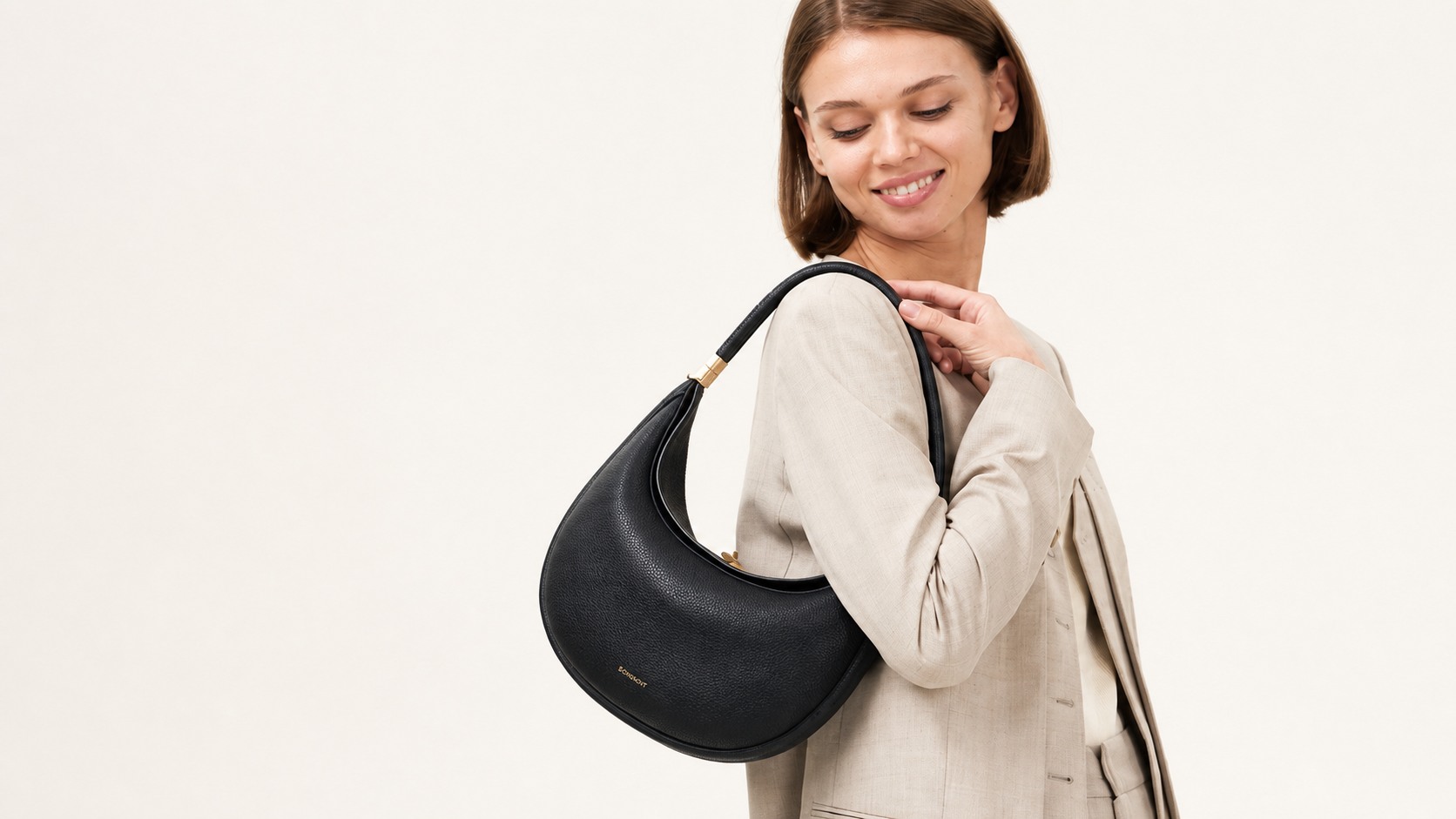
Use a tape or piece of string at the stated total length and place it over the clothing you normally wear. Note where the bag body would begin, not only where the strap passes over the shoulder. Body height, torso shape, coat thickness and preferred side all change the result. The Luna page also describes four ways to wear the bag, but a maker-described configuration is not evidence that every position feels equally comfortable or secure.
7. Treat listed weight as the start of a load calculation
Empty weight matters because the contents often outweigh the bag. Songmont lists the Luna at 450 g, the Medium Song at 480 g and the Mini Drippy Roof at 350 g on the checked pages. These figures allow a direct record of the maker-stated starting point, provided the exact version matches.
Add the approximate weight of the everyday contents, including a water bottle or charger. Then compare the total with a bag you already carry comfortably. This is a planning exercise, not a prediction: strap width, body contact and weight distribution influence perceived load, and those qualities require physical assessment. A lighter published figure therefore should not be converted into a comfort claim.
8. Separate exterior material, lining and hardware
“Leather bag” is not a complete material record. The three checked Songmont pages identify full-grain leather exteriors, but their interior descriptions differ. The Luna page says the lining may be synthetic leather or fabric with random delivery. The Medium Song listing describes a removable pouch with fabric/full-grain leather in its material line. The Mini Drippy Roof page identifies a microfibre fabric lining.
Hardware descriptions also vary: the Luna and Medium Song checked pages list gold-plated stainless steel, while the Mini Drippy Roof page lists stainless steel with a vacuum-electroplated finish. Record these statements without turning them into unsupported judgements about quality or lifespan. Ask for current care instructions, colour-transfer precautions and exact variant details when lining or finish matters to the decision.
9. Look at the base, feet and structural behaviour
A bag that appears upright in a studio image may have been arranged for the photograph. The Medium Song and Mini Drippy Roof records list four metal feet, which establishes the presence of base hardware. It does not prove that the bag always stands independently, avoids surface contact in every position or resists scratching.
Consider how a soft body will behave at the load you actually carry. Ask whether a rigid object might create a visible corner, whether the base needs an organiser and whether the bag must stand on a desk or floor. If shape retention matters, seek a clear side view and current construction description rather than inferring stiffness from lighting.
10. Use photography as bounded evidence
Official images are valuable for identifying proportion, seam placement, colour relationships and intended carry configurations. A front still can show a silhouette; a side view can reveal depth; a lifestyle image can show the intended relationship to the body. None of these alone establishes capacity, comfort, colour accuracy or long-term wear.
Check whether every image refers to the selected size and colour. Compare neutral-background views with lifestyle photographs and look for a scale reference whose dimensions are actually known. Treat retouching, lens perspective and screen colour as uncertainties. When a necessary angle or interior view is absent, mark the question unresolved instead of filling the gap with an assumption.
11. Check regional selling terms and aftercare
An international product page does not guarantee identical stock, delivery, duties, returns or warranty handling in every location. Identify the active seller and destination before relying on a return window. Check whether sale items, personalised products or used goods have different conditions, and who pays return shipping.
For natural materials, aftercare is part of ownership. Read the official instructions for storage, moisture, heat and surface cleaning. Ask how hardware or straps are serviced in the buyer’s region. Live price and stock change too quickly to serve as stable editorial facts, so they should be confirmed at checkout rather than copied from an older article.
12. Build a comparison record instead of a score
A compact table or note should contain only decision-relevant fields: exact version, dimensions, opening, closure, internal organisation, strap range, empty weight, exterior, lining, hardware, base, regional seller and unresolved questions. Leave a field blank when the official page does not establish it. That blank is more useful than a guessed answer.
For the three examples, the Luna offers a crescent form and maker-described multi-position carry; the Medium Song combines a rounded body with a removable zipped pouch; the Mini Drippy Roof combines a compact roof-like outline with the widest listed strap range of the three checked records. These are distinctions, not scores. The right choice depends on the brief written at the beginning.
13. Make the final decision with a verification checklist
- Match the product title, size, colour and regional URL.
- Measure the largest rigid item against the current size chart and opening.
- Confirm the closure and decide how much containment the use case requires.
- Test the published strap range with string over normal clothing.
- Add contents to the listed empty weight without inferring comfort.
- Verify exterior, lining, hardware, care, returns and warranty for the exact version.
- Keep missing dimensions, fit and performance questions explicitly unresolved.
Continue with the Songmont profile and the individual records for the Luna Bag, Medium Song Bag and Mini Drippy Roof Bag. Each record separates cited facts from the questions that still need confirmation.