



The cat home is no longer defined by a bowl in the kitchen and a litter tray hidden in a utility corner. As more cats live inside compact apartments, feeding, water, litter, rest, scratching and transport become recurring spatial questions. Products must serve an animal while also sharing the visual and maintenance systems of a human interior.
Two Chinese brands make that shift visible in different ways. pidan often treats pet equipment as a calm domestic object or small landscape. PETKIT builds connected appliances around repetitive care. This story reads their public product records as evidence of a wider design change. It is not based on product testing, veterinary advice or a brand partnership.
The pet product enters the room
Traditional pet equipment was frequently treated as something to conceal. Contemporary products increasingly accept that litter boxes, feeders and beds remain visible. The design task changes: odour, cleaning and animal behaviour still matter, but proportion, colour and placement now matter too.
This does not mean an attractive object is automatically suitable. A cat’s size, mobility, health and habits determine whether an opening, platform or enclosure works. Public images can establish intended form, not individual acceptance.
pidan gives utility an architectural boundary
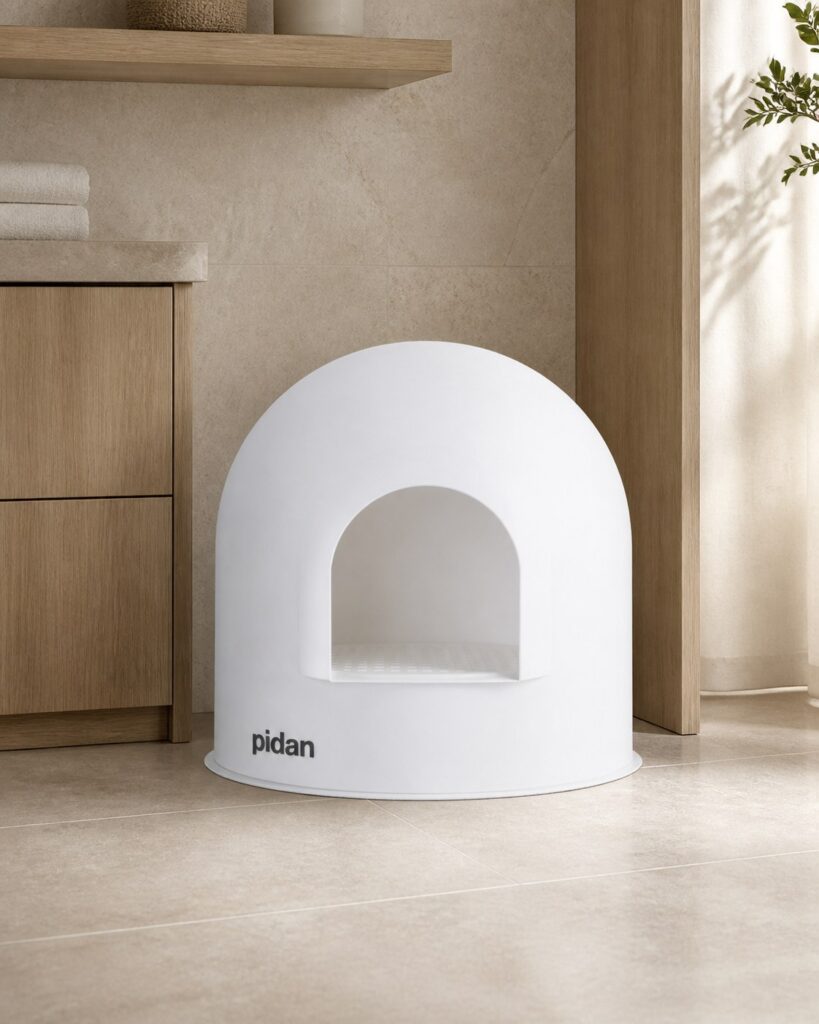
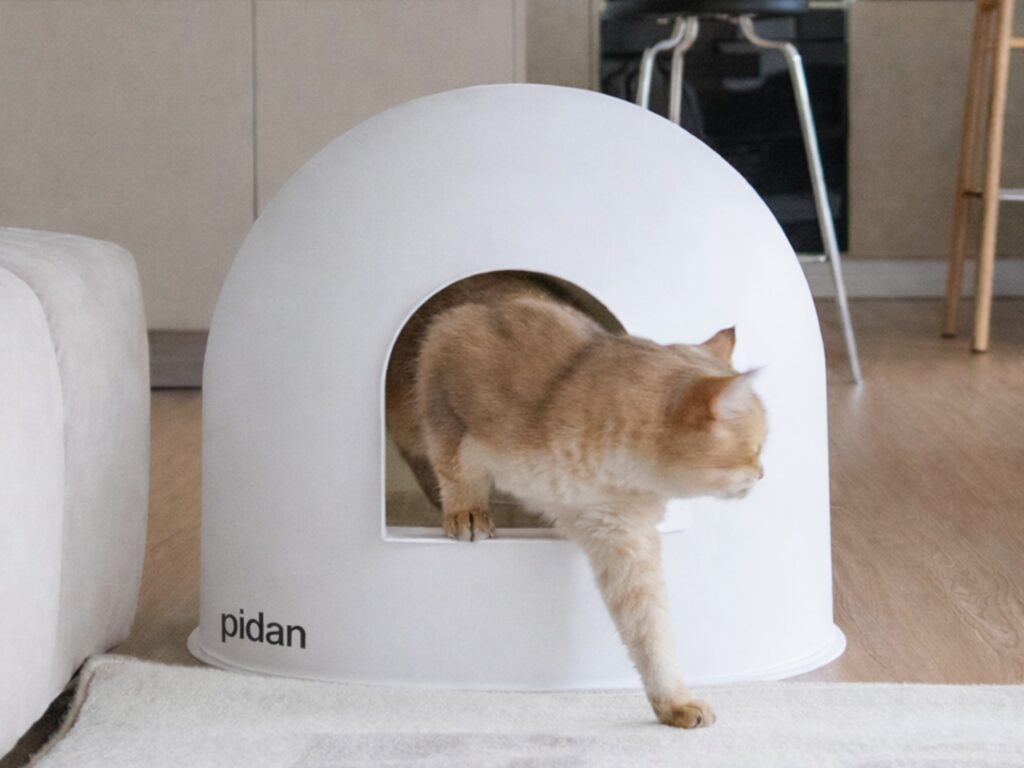
The pidan Igloo Cat Litter Box wraps a litter area in a rounded enclosure with a defined entry path. Visually, it behaves like a small piece of architecture: an outer shell, an opening and an internal zone. The form makes the litter function legible without reproducing the familiar open tray.
The corridor and grid are intended to reduce loose litter leaving the enclosure, according to the product record. That remains a maker-described function, not an independently measured result. Entry size, cleaning access and the cat’s willingness to use an enclosed space require household-specific evaluation.
Rest and scratching become a landscape
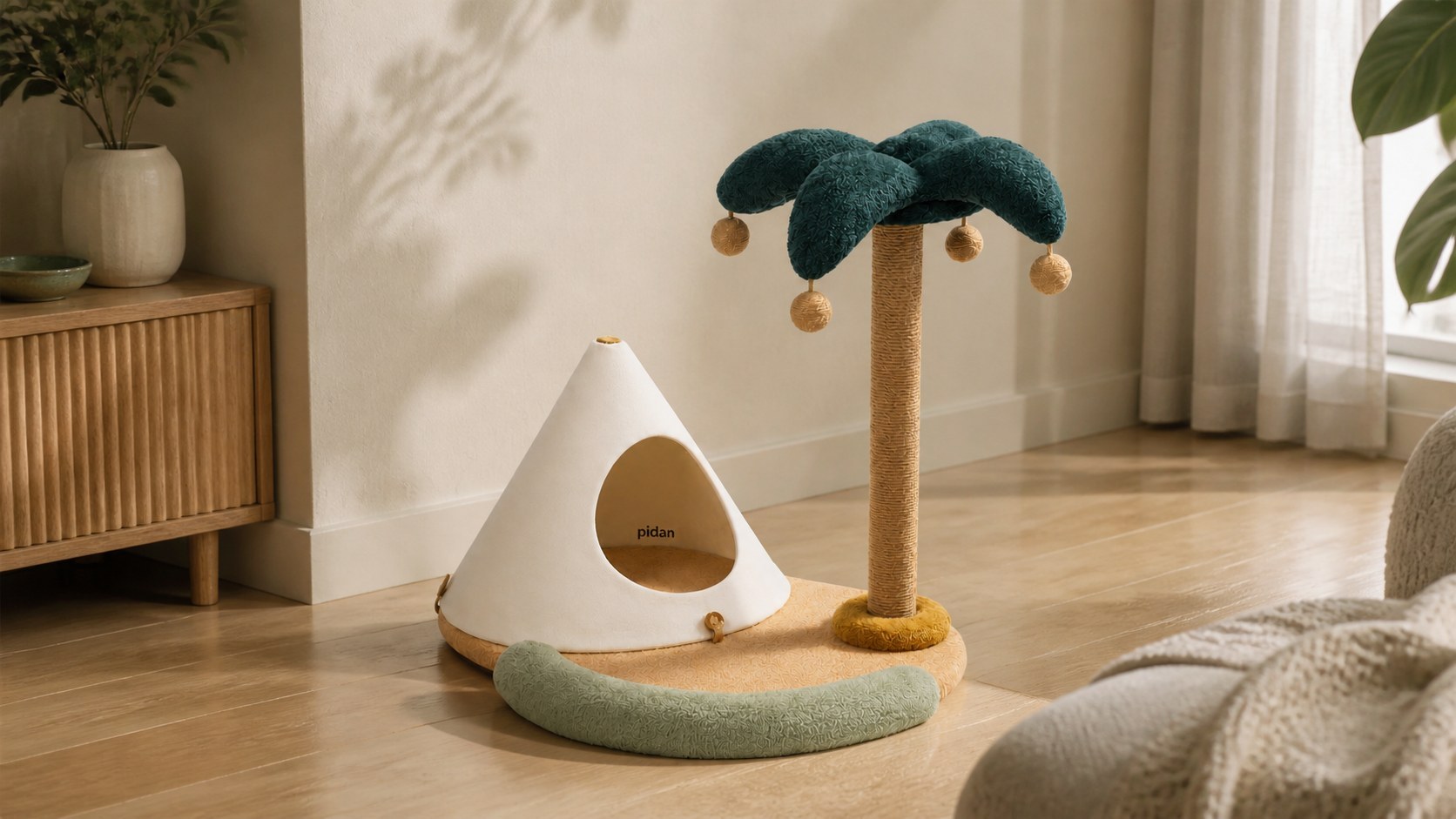
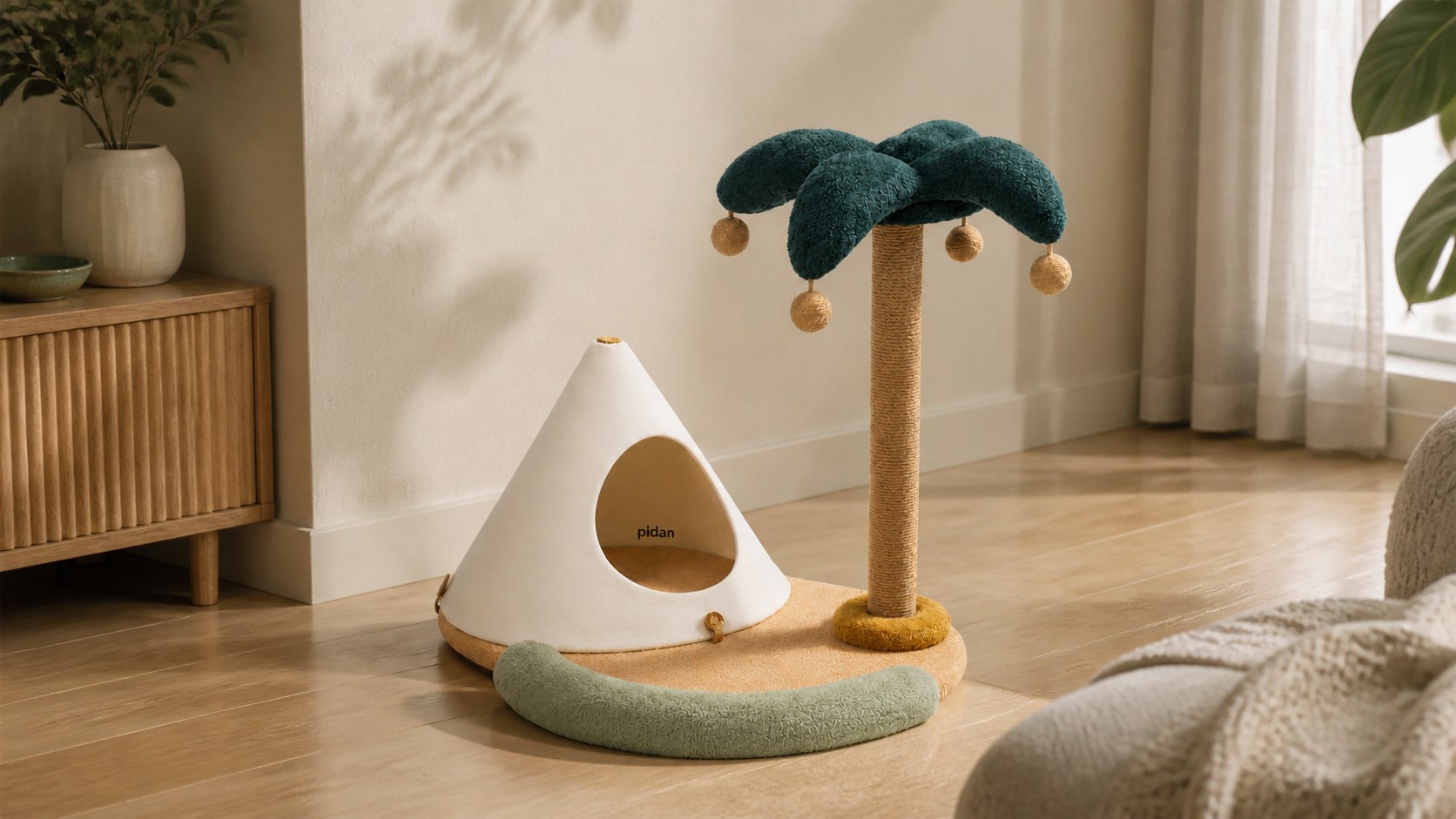
Cat Island combines a tent-like nest, a tall scratching post, hanging objects and a padded perimeter in one floor-based composition. Instead of presenting each behaviour as a separate accessory, it groups hiding, scratching, play and rest into a small domestic landscape.
The composition resembles furniture more than an appliance. Its muted materials and botanical silhouette can sit within a living area, yet the visual metaphor must not override function. Stability, fibre wear, replacement availability and the dimensions of the resting zone should be checked against the individual cat.
Mobility expands beyond a closed carrier
The pidan Expandable Travel Habitat Carrier turns a wearable carrier into a larger temporary enclosure when opened. This reframes transport as two linked moments: compact movement and a stationary waiting period. The product therefore mediates between the street, vehicle and temporary indoor space.
Public records can show the expansion mechanism and stated materials. They cannot establish comfort, escape resistance or suitability for a particular journey. Ventilation, closures, animal weight, route rules and acclimatisation remain essential checks.
PETKIT starts with repetitive care
PETKIT’s selected products address feeding, water and litter as recurring tasks. Sensors, schedules, circulation and waste handling move the category toward connected household equipment. The product is no longer only a container; it is part of a routine involving power, consumables, cleaning and software.
Automation can reduce certain manual steps, but it also introduces dependencies. Electricity, network access, firmware, compatible liners or filters and regional support become part of the product’s practical footprint.
Feeding becomes a scheduled system
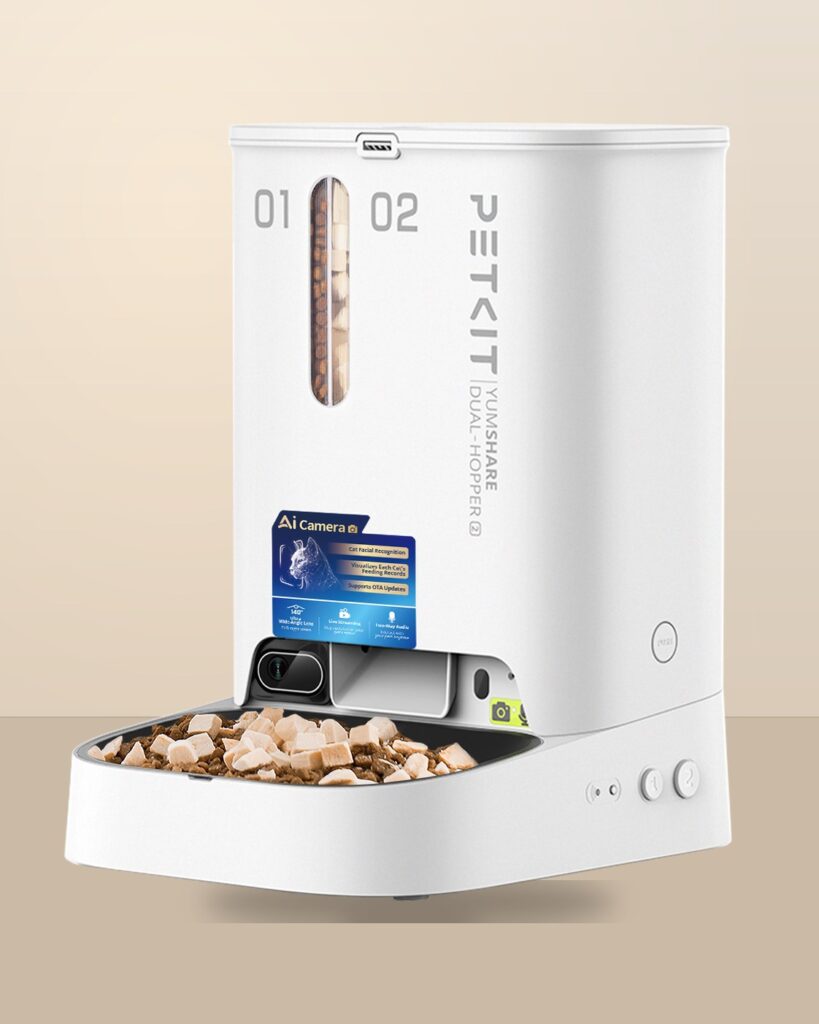
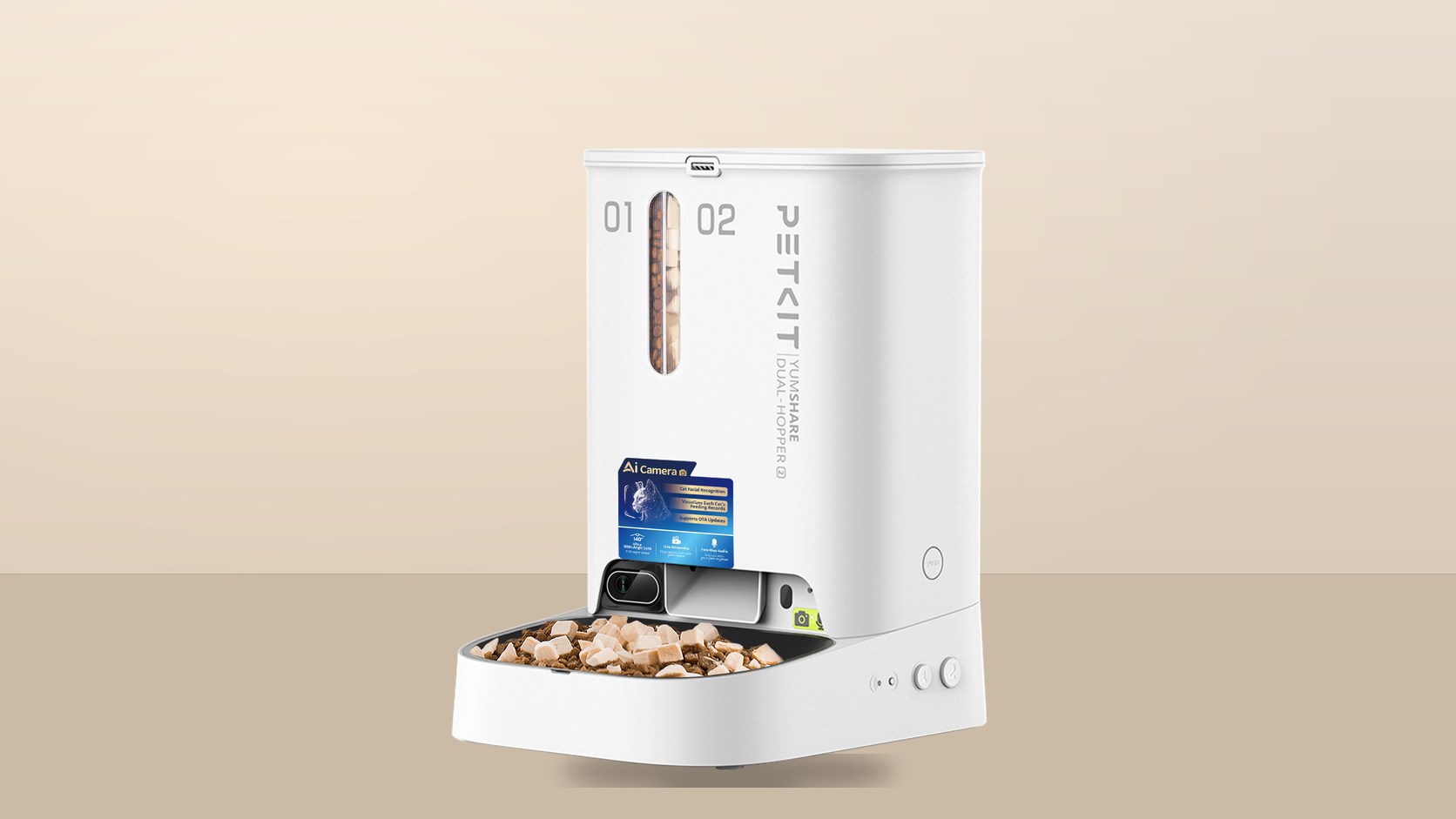
The YumShare Dual-hopper 2 combines separated food storage with automated dispensing and a camera-based view. The dual-hopper architecture is intended to manage more than one dry-food type or portion routine. Its usefulness depends on food compatibility, portion settings, cleaning and reliable household setup.
A camera can provide visibility, but it does not replace direct observation or veterinary judgement. Buyers should verify privacy controls, account requirements, regional app availability and what happens when power or connectivity fails.
Water becomes circulation and maintenance
EVERSWEET MAX 2 UVC presents drinking water as a circulation system with filtration and maker-described UVC treatment. The object sits between bowl and appliance. Its value depends as much on cleaning intervals, filter supply and pump access as on the visual form.
Claims about water quality require precise evidence. ChinoMuse does not infer sterilisation performance or health outcomes from product imagery. The active product manual and official replacement schedule should govern use.
Litter becomes a household appliance
PUROBOT MAX PRO 2 moves waste separation, monitoring and enclosure into a powered unit. This changes the spatial requirement: clearance, floor level, power access and a cleaning route become part of installation. The appliance also occupies more visible volume than a basic tray.
Automatic operation should never be treated as maintenance-free. The exact safety features, cat-size limits, litter compatibility, waste-bin routine and fallback procedure must be confirmed for the regional model.
Passive object and connected appliance
pidan and PETKIT reveal two complementary design strategies. One uses enclosure, texture and furniture-like composition to integrate pet behaviour into the room. The other uses sensing and automation to organise repeated care. Neither strategy solves every household.
A passive object usually has fewer technical dependencies but still demands cleaning and behavioural fit. A connected appliance can make routines more visible or scheduled, while adding software, power and consumable requirements.
The cat home is a set of zones
Feeding, water, litter, sleep, scratching and retreat should not automatically be compressed into one corner. The correct distances depend on the home and the animal. Product design can make each zone more coherent, but planning the relationship between zones remains a household task.
Measure floor area, door swing, service clearance and the route used to remove waste or refill food. A product that fits its photographed setting may not fit the actual room once maintenance access is included.
Maintenance is part of the visual system
Objects remain attractive only when surfaces, filters, liners, fabrics and moving parts can be maintained. Before purchase, identify every recurring consumable and the regional source for replacements. Check whether parts can be removed without moving other furniture.
For connected products, also record app support, account requirements, firmware policy and manual controls. The most convincing domestic integration is not the clean launch photograph; it is a routine that remains manageable after months of use.
What the records establish—and what they do not
The cited official pages establish product identity, intended functions and public design language. They do not establish universal cat acceptance, veterinary benefit, long-term reliability, current stock or service in every country. ChinoMuse has not physically assessed these products.
Explore the pidan profile, PETKIT profile, Cat Island record and PUROBOT MAX PRO 2 record. Together they show how Chinese pet product design is moving from hidden utility toward a deliberate system of objects, routines and domestic space.