A product used to be easy to picture as a finished object: a tool in a drawer, a bin in a kitchen, a label maker on a desk. Many contemporary products are harder to understand in isolation. Their usefulness continues through a controller, consumable, modular attachment, storage arrangement or sequence of repeated actions.
Three current records from Aqara, NIIMBOT and TOWNEW do not describe one market or prove a universal trend. They reveal a recurring design question among very different Chinese brands: what has to surround the object for an everyday routine to keep working?
The unit of design is becoming the routine
A standalone object can be judged by what it does at one moment. A system is judged across time. It must be configured, replenished, stored, updated, cleaned or reassembled. The moments between headline functions become part of the design brief.
This changes what buyers need to verify. A polished enclosure is only the visible layer. Software, refills, compatible parts, maintenance and fallback controls can determine whether the product remains useful.
Aqara turns room states into actions
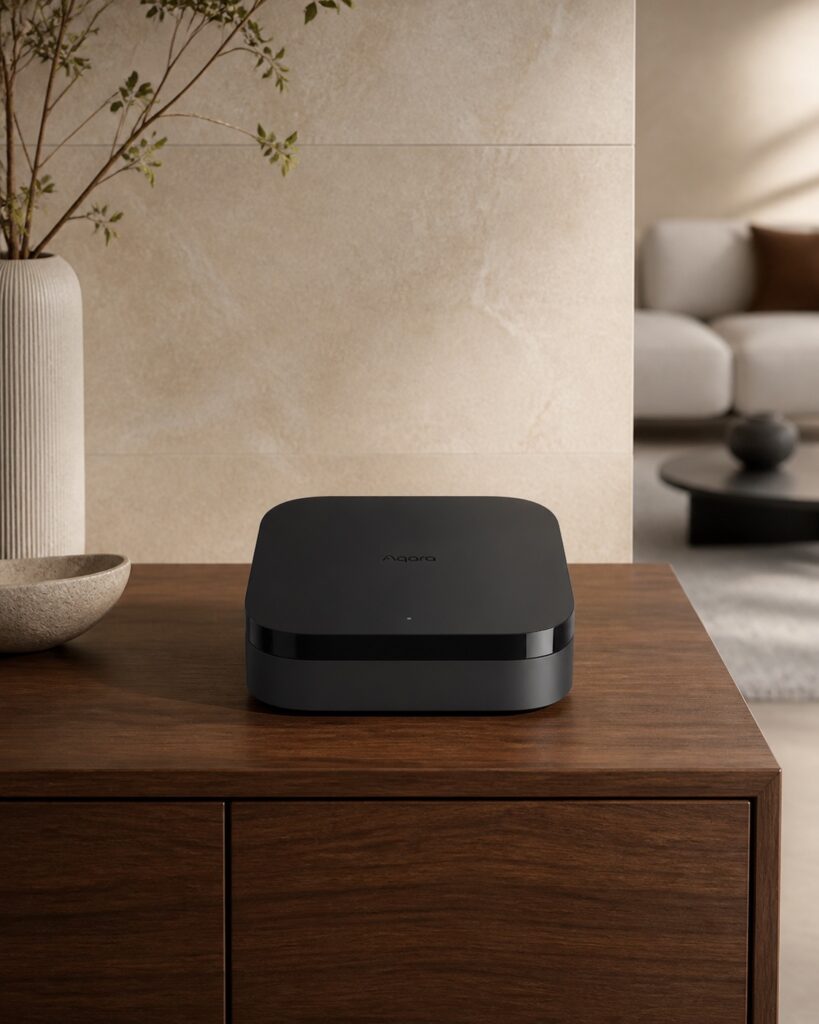
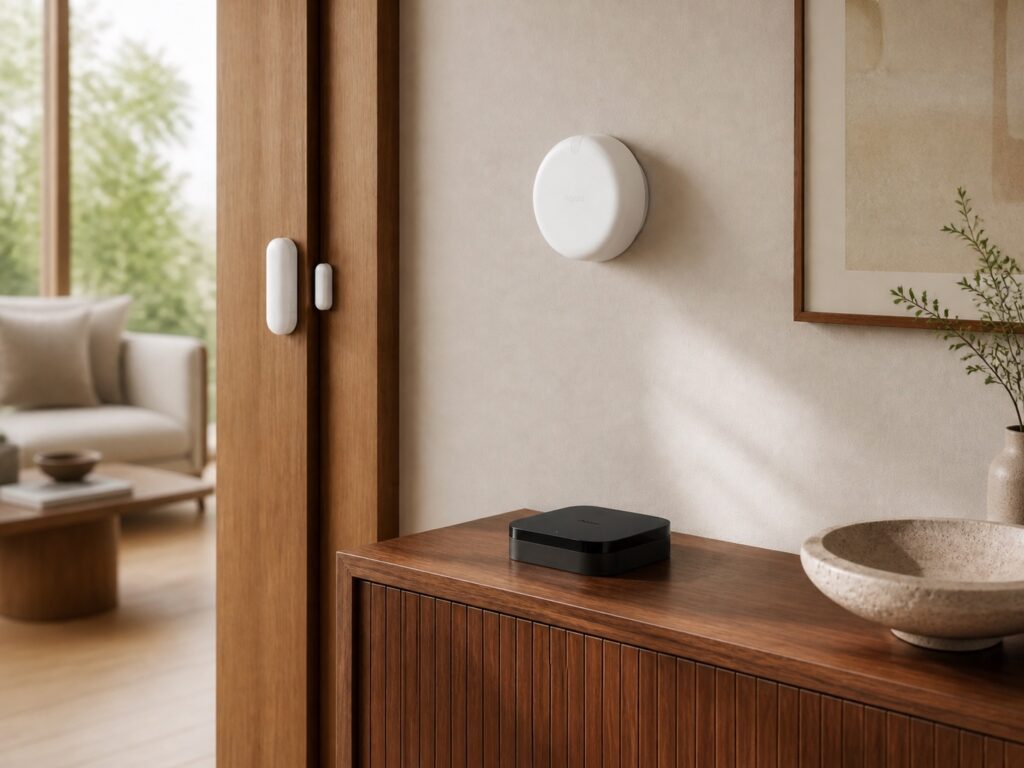
The Aqara Hub M3 is not primarily an object someone handles throughout the day. Its role is to coordinate devices and automations. Aqara describes it as a Matter controller, Thread border router and Matter bridge, with Zigbee and dual-band Wi-Fi support.
Value moves into relationships: a sensor reports a state, a rule interprets it and another device responds. The routine can feel simple, but the supporting system includes placement, network roles, firmware and decisions about local or remote processing.
NIIMBOT joins a device to an information habit
The NIIMBOT B21 Pro prints labels, but the useful result is not the strip alone. Someone decides what deserves a label, creates a naming convention, maintains the roll supply and keeps information current.
The printer is joined to software, direct-thermal media and a household or workplace taxonomy. A clear system can reduce search time; an inconsistent one adds visual noise. The design reaches into behaviour without guaranteeing that behaviour will be disciplined.
TOWNEW builds the refill into the waste routine
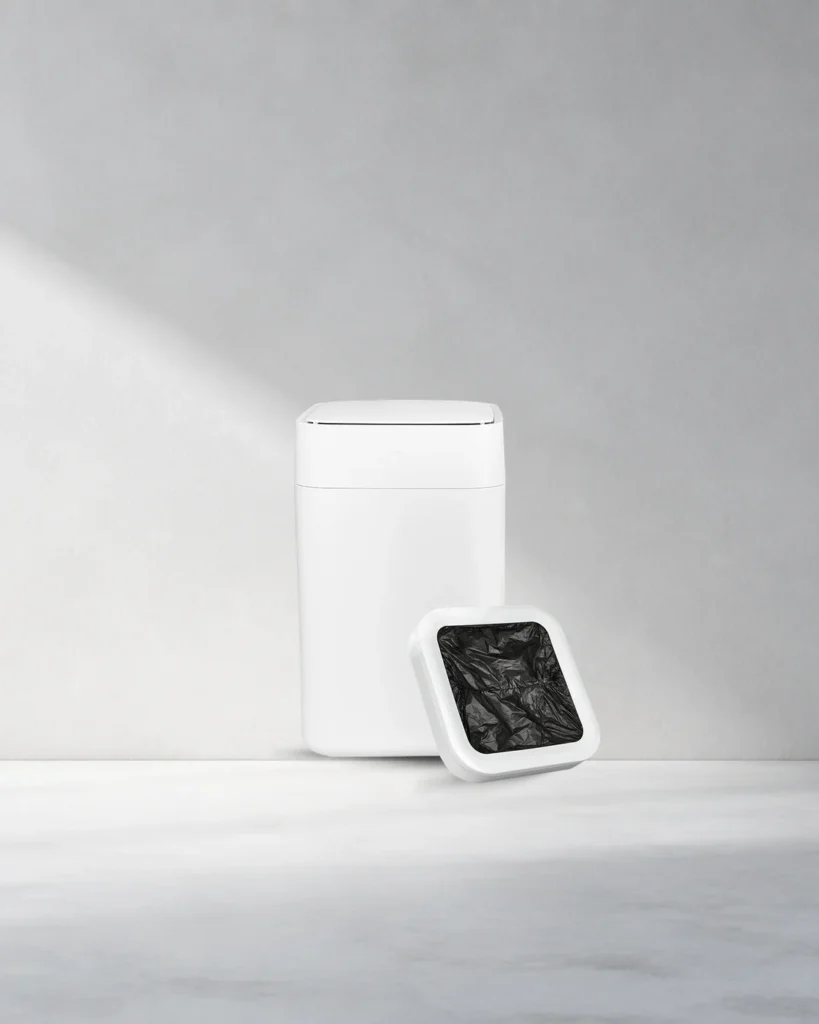
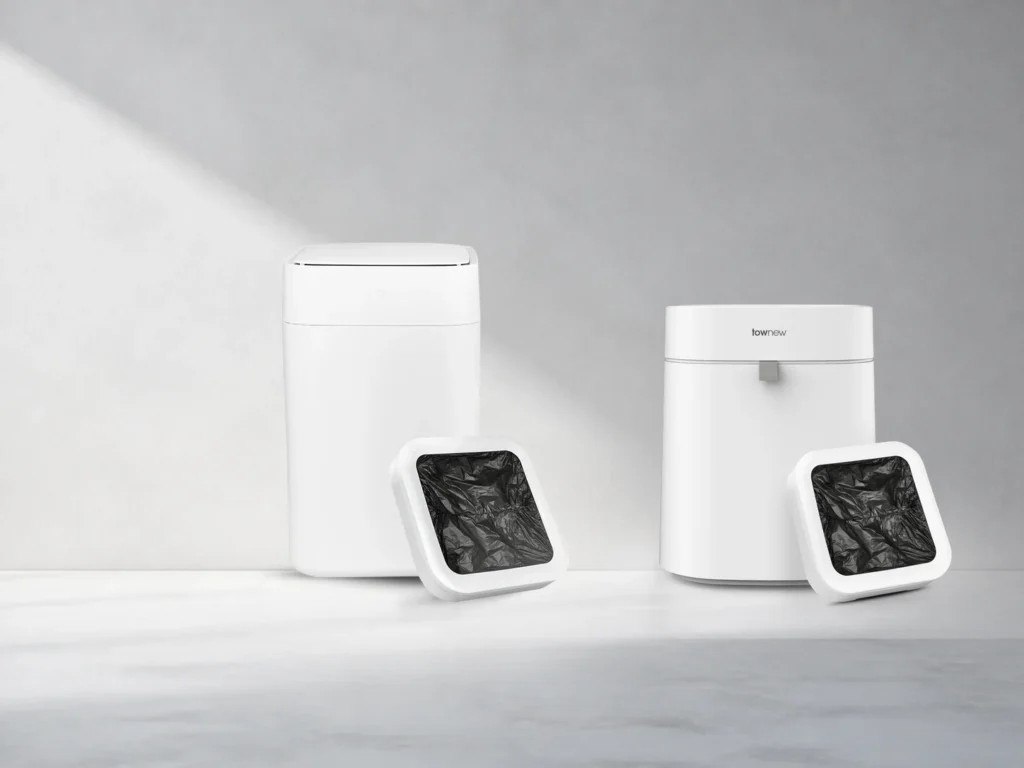
The TOWNEW T1 combines a sensor-controlled lid with a powered sealing cycle and compatible refill ring. The bin is not complete as a long-term routine without replacement liners, charging and a way to handle the sealed bag.
By designing refill and sealing with the enclosure, TOWNEW moves attention from disposal to what happens after the bin is full. That can reduce contact, but it also creates dependency on compatible consumables and a working mechanism.
Software and consumables create different dependencies
A software-dependent system may change through an update, account policy or platform integration. A consumable-dependent system may be limited by refill availability. A modular physical system may outlast accessories or lose a small critical component. These are different risks and should not be collapsed into one idea of “ecosystem”.
The practical question is specific: what external element must remain available for the core routine to continue? The answer may be a server, label roll, liner ring, bit or detachable handle.
Storage is an active part of ownership
Several examples treat storage as a designed state rather than dead time. NIIMBOT media and printed labels need a place in the workflow. TOWNEW refill rings have to remain available near the bin. Even a hub depends on stable position, power and network access.
An object that stores badly creates friction before its main function begins. This is why dimensions, cable routes, refill volumes and component counts matter alongside appearance.
Automation moves work instead of eliminating it
When a lid opens, a label prints or a room reacts automatically, effort has not vanished. Some work has moved earlier into setup and later into maintenance. The owner chooses the rule, supplies the consumable, resolves an error and decides when the system no longer fits the routine.
Good system design makes this transferred work visible. Clear status, replaceable parts, manual controls and understandable failure states prevent convenience from becoming confusion.
The business model can sit inside the architecture
Refills, accessories and software services create recurring relationships after purchase. That relationship may support compatibility and updates; it may also narrow substitution. The product record should distinguish technical necessity from commercial bundling.
None of the examples establishes sales success or customer preference. They show where continued availability matters and which questions should be asked before the first purchase.
Interoperability has limits
A common protocol, connector or modular format can reduce friction, but it does not make every function portable. Platform interfaces may expose only part of a device. Replacement media may fit physically but use a different sensing method. Similar cookware dimensions do not prove handle compatibility.
System claims should remain tied to the exact model, region and current documentation. A brand name is not a compatibility specification.
Routines reveal what the product page leaves out
Imagine the full sequence instead of the hero moment. Who changes the battery? Where are refills stored? What happens when the internet is unavailable? Can another household member understand the labels? Does a detachable handle have an obvious home?
These questions expose the infrastructure behind convenience. They also produce a more accurate editorial record because they separate published capability from the conditions needed to use it.
Three objects, three different systems
Aqara coordinates state and response. NIIMBOT connects printing to information order. TOWNEW integrates a waste enclosure with refills and sealing. The similarities are structural, not proof that the products share quality, audience or performance.
What they share is an expanded boundary around the object. The routine becomes legible only when supporting parts are included.
What public records can and cannot prove
Official pages can establish identity, named components, published specifications and the manufacturer’s described workflow. They cannot establish long-term reliability, software continuity, local supply, ease of use or the quality of a routine in a particular home.
A responsible comparison keeps those limits visible. It asks what the product depends on without turning an editorial observation into a performance verdict.
Designing for continuity
The strongest system is not necessarily the one with the most connected parts. It is the one whose dependencies are proportionate, understandable and maintainable. A routine should survive ordinary interruptions and remain controllable by the people who live with it.
For brands, that means designing beyond first use. For readers, it means evaluating the invisible system with the same care as the visible object.
Editorial scope
This independent story was checked against the cited first-party product records on 14 August 2026. ChinoMuse did not interview the brands and has not physically used or tested the products. No sales trend, partnership, sponsorship, endorsement or guaranteed performance is claimed. Product details, software, consumables and availability may change.