Material-led furniture is often easiest to admire and hardest to evaluate. A paper shell, a chair stitched from ceramic fragments or a table faced with washi can communicate a clear design idea in one photograph, while leaving basic questions about structure, care, production and use unanswered. The task is not to decide whether an unusual material is inherently better. It is to separate what the public record establishes from what still requires a technical sheet, sample or direct conversation with the studio.
This guide uses three current PINWU records as its main examples, with references to BENTU and Stellar Works for comparison. It is a design-reading and verification framework, not a ranking or an account of physical use. ChinoMuse has not handled, sat on, load-tested, cleaned or conserved the featured objects.
1. Identify the status of the object before judging it
Begin by asking what kind of record you are looking at. A conceptual work, exhibition prototype, limited edition, made-to-order object and continuously stocked retail product require different evidence. An archive page may accurately document a work without establishing that it can currently be purchased, commissioned or replaced.
Write down the official work name, year, designer, maker and the language used for its status. PINWU presents CEWO, GU and Piao II as documented furniture works, but the checked pages do not publish current prices, stock, edition sizes or international delivery. Treat those fields as unresolved rather than reading availability into a polished photograph.
2. Map every material to a component
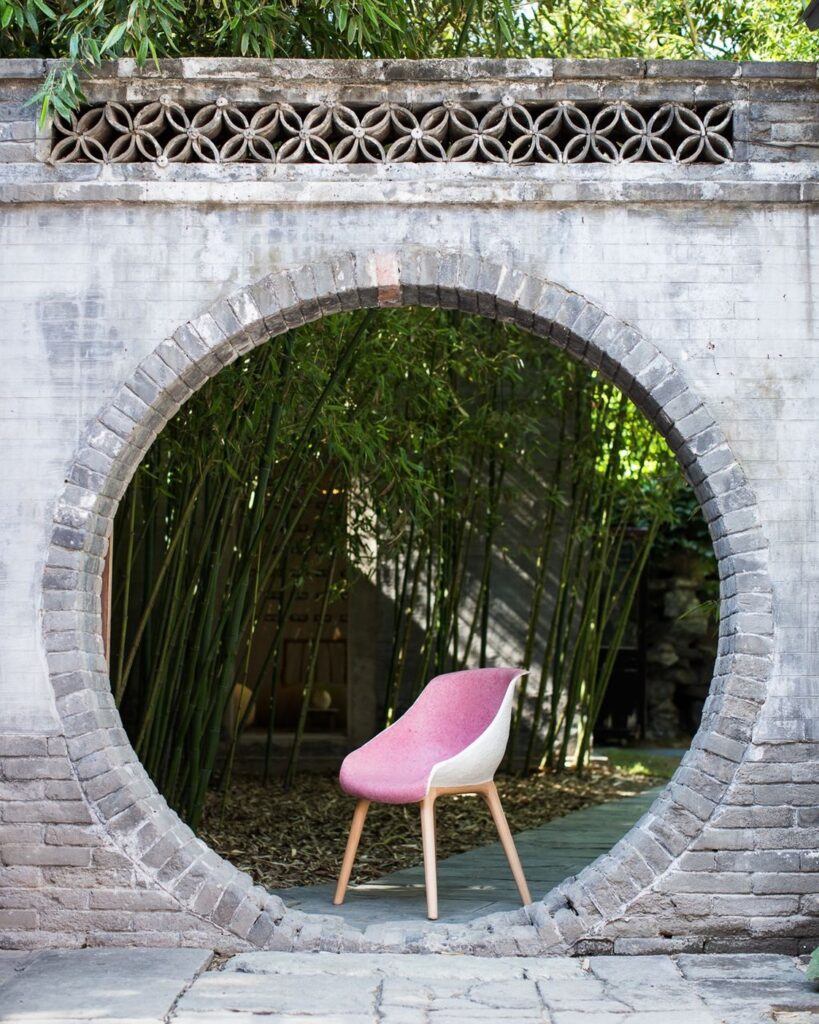
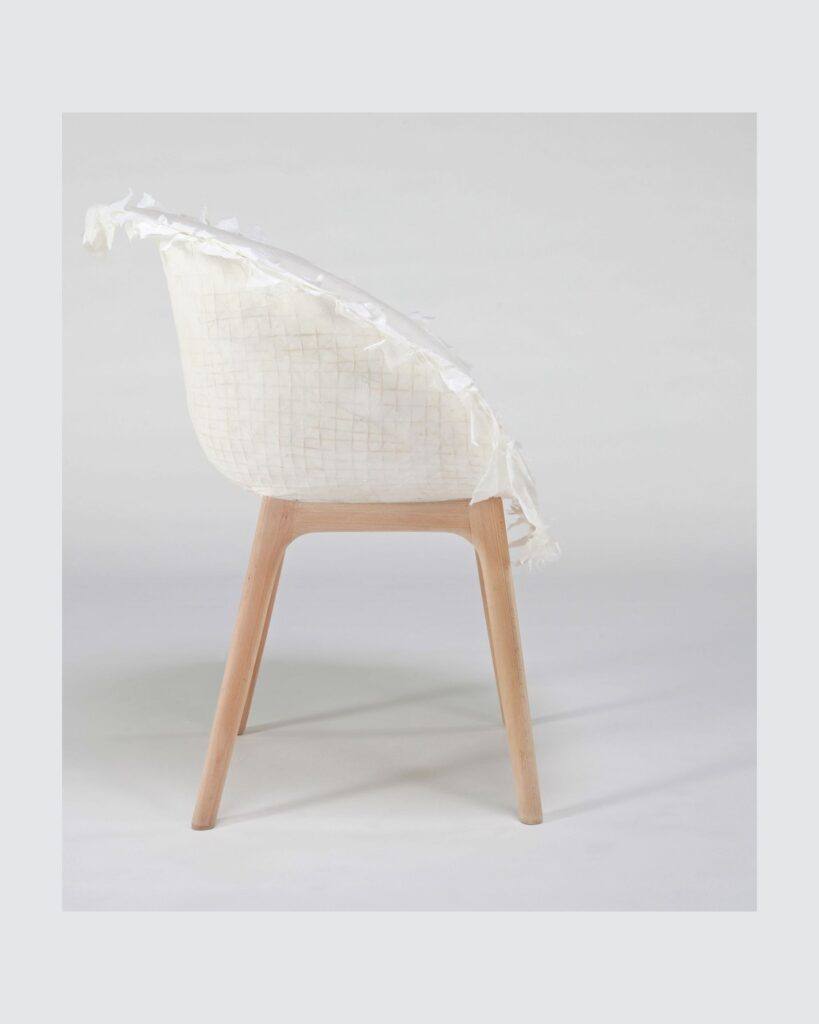
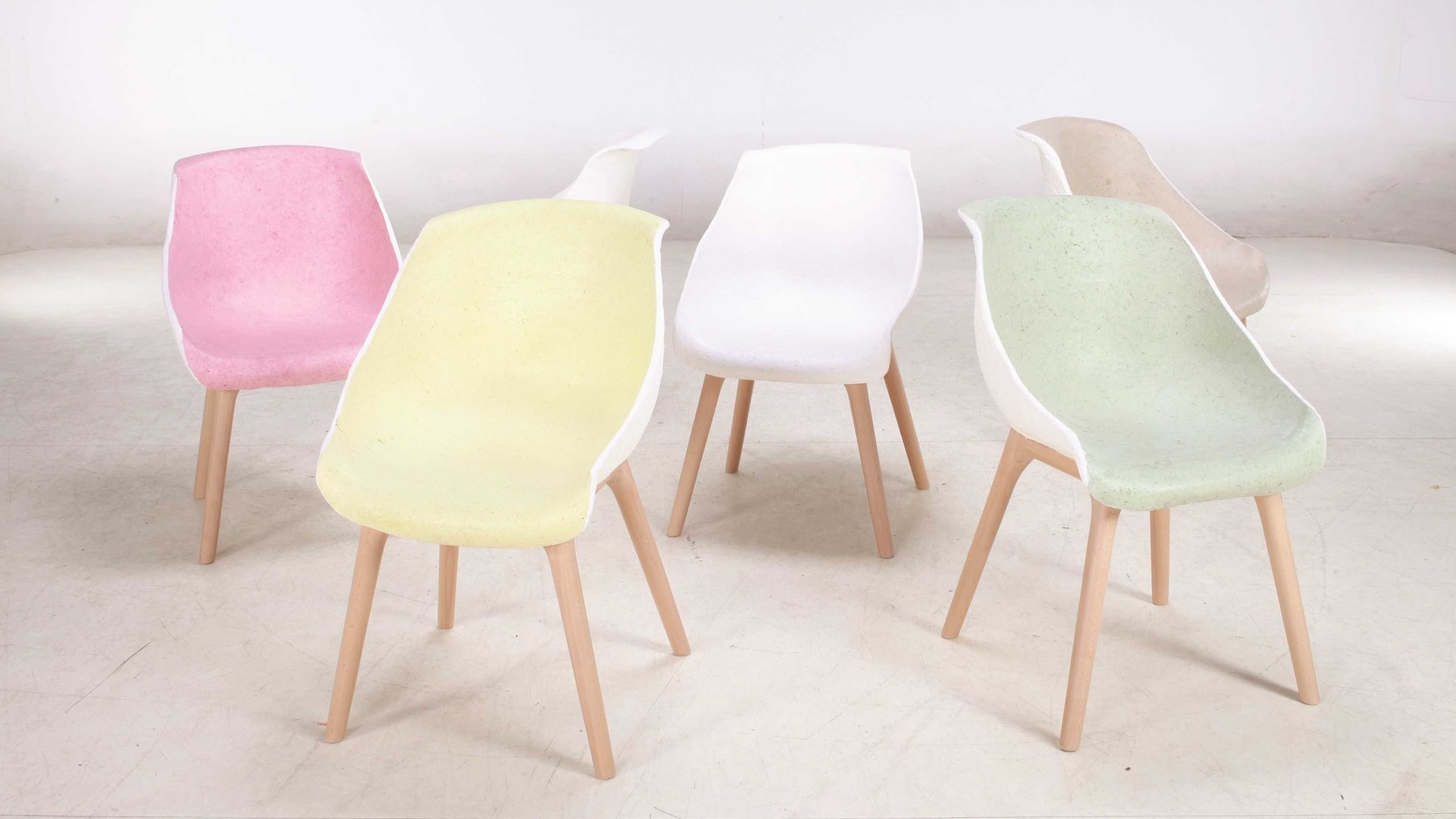
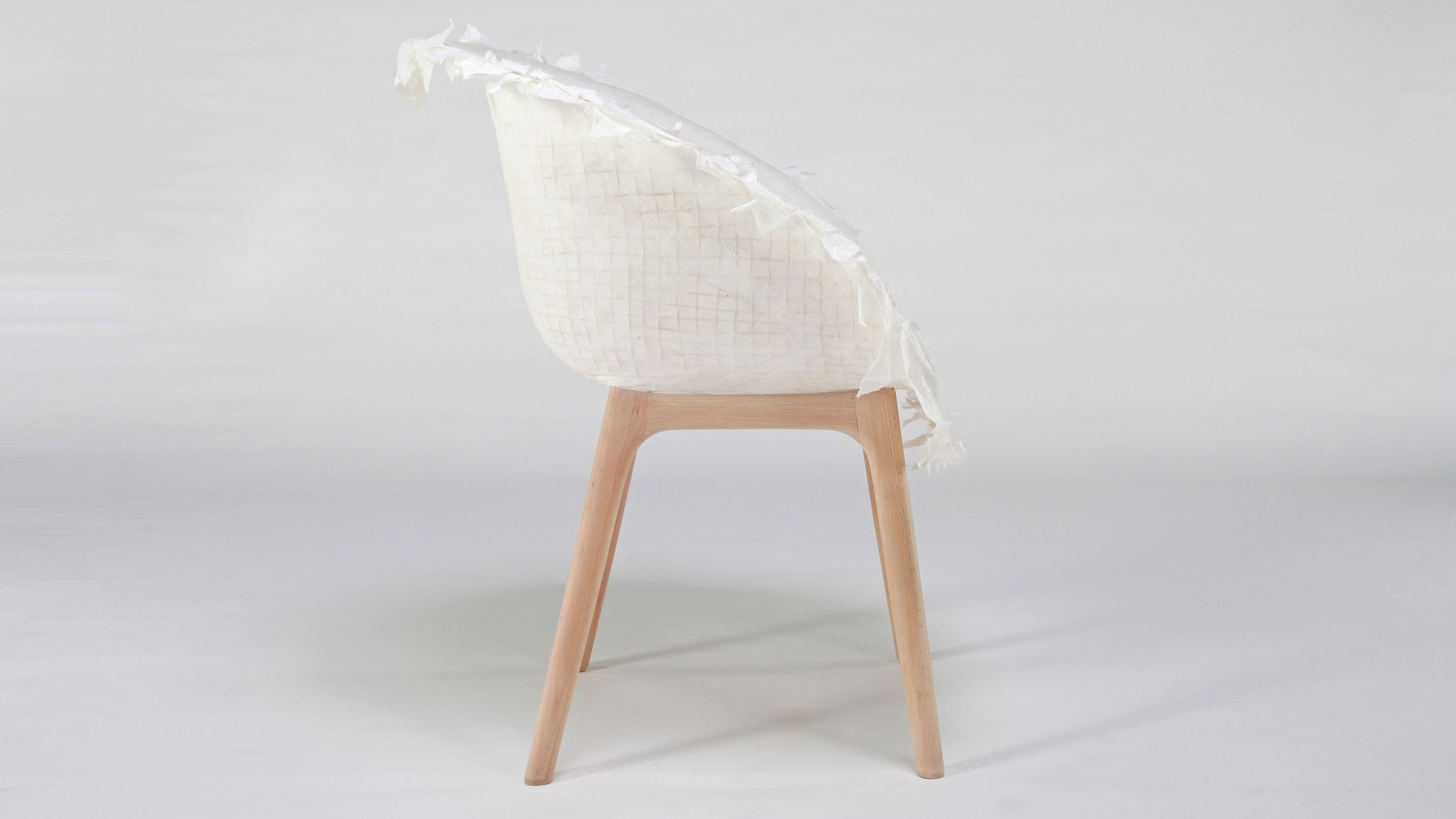
A list of materials is useful only when each material can be located in the object. Separate shell, frame, legs, connectors, surface coating and removable parts. The PINWU GU chair has a paper-pulp shell and a light wooden support structure. The Piao II chair combines bark paper, beech and fine bamboo filaments. These are material systems, not single-material objects.
Create a simple component table and mark which entries are explicit, which are visible but unattributed and which remain unknown. Do not infer adhesive, coating, fastener alloy or protective finish from appearance. An omitted secondary material can control repair, fire behaviour or recycling even when the named material carries the story.
3. Keep material identity separate from performance
Paper, ceramic, recycled plastic and washi describe origins or categories; they do not by themselves establish strength, water resistance, load capacity or durability. Performance depends on thickness, fibre orientation, binders, geometry, joints, finish and manufacturing control. A familiar material can behave differently when pulped, laminated, stitched or bonded into a new form.
Record performance only when the source provides a precise statement and enough context to understand it. The absence of a published load rating does not prove weakness, but it prevents a responsible claim about routine seating. Likewise, a visible recycled surface can support identification without proving an environmental benefit or a particular recycled percentage.
4. Read the joint as carefully as the surface
Experimental materials often attract attention at the surface, while the joint determines how the object behaves. Look for transitions between shell and legs, holes near brittle edges, thread paths, concealed brackets and areas where a material changes thickness. Ask whether the connection is permanent, reversible or intended to flex.
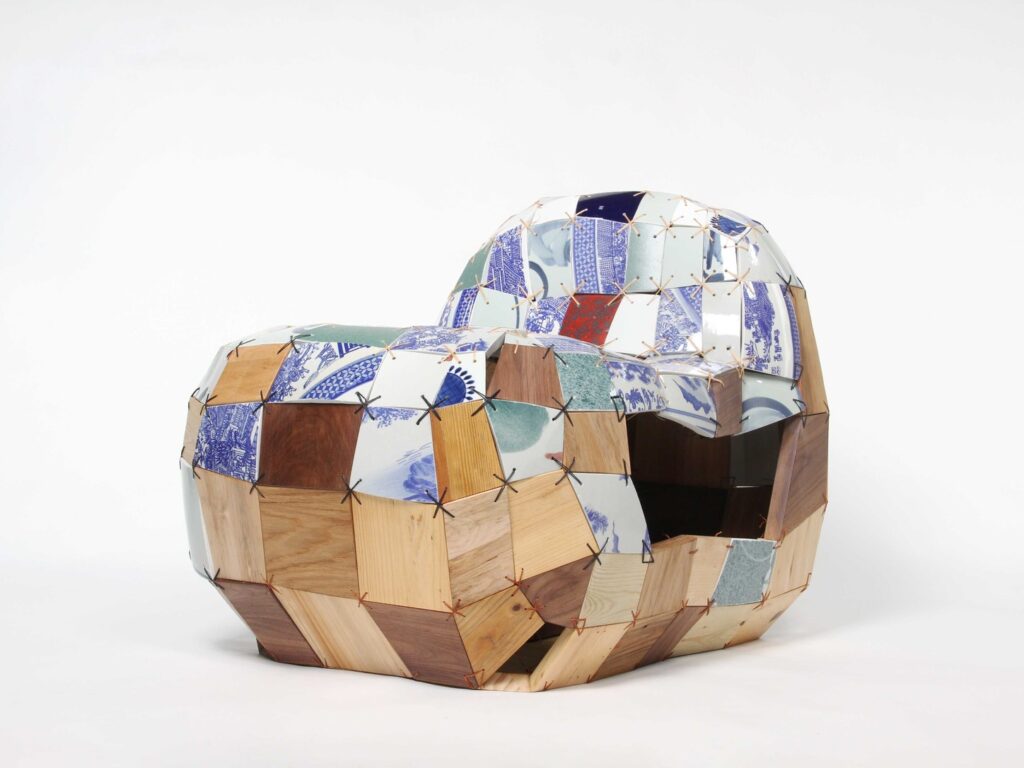
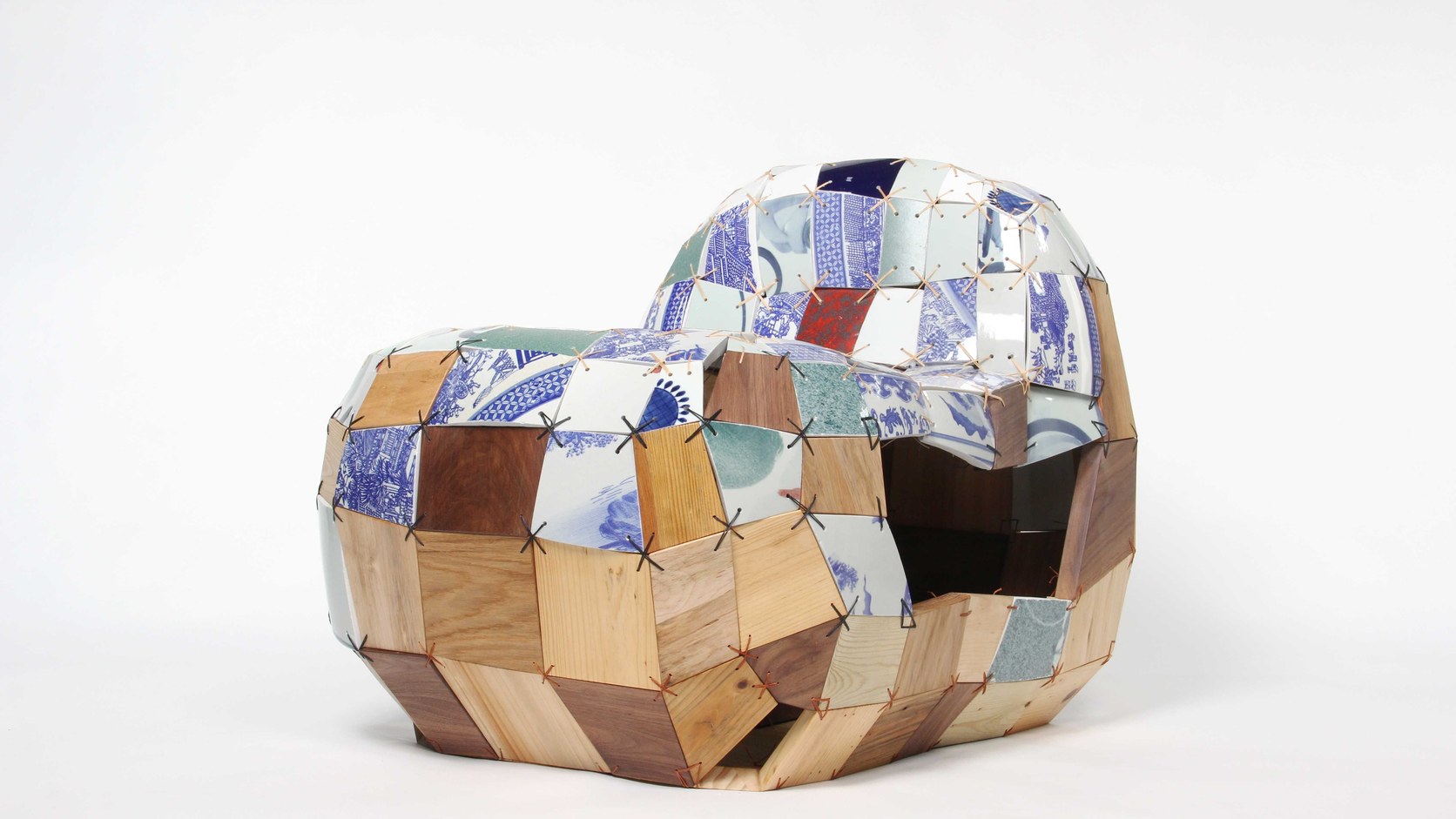
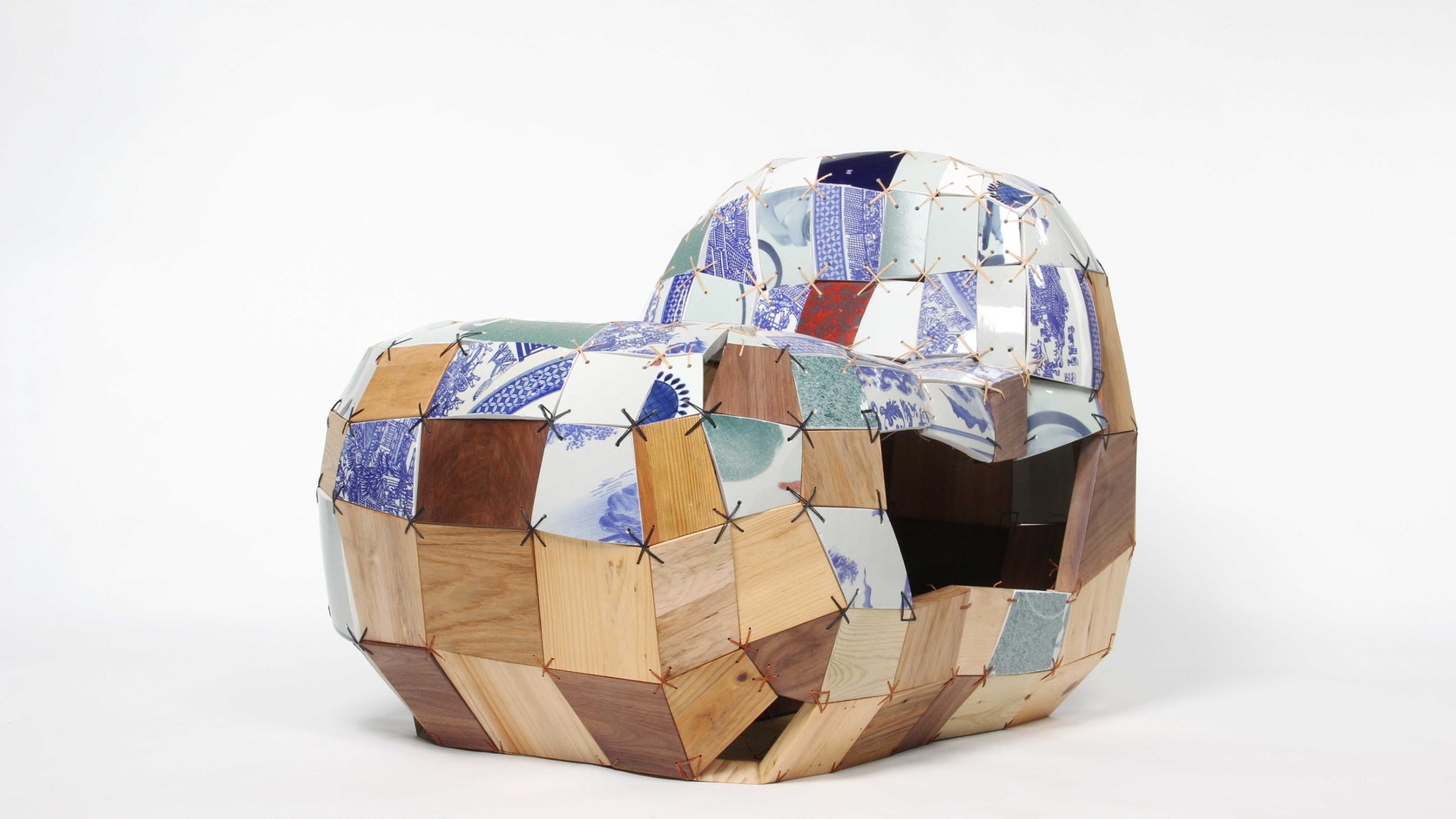
The PINWU CEWO chair makes its connection visible. Its official record describes 105 ceramic fragments and 69 reclaimed wood pieces bound together with knots, with stitching that can be cut so the pieces may be reconfigured. That explains the design logic. It does not supply a maximum load, edge-protection method or replacement procedure.
5. Check geometry before comfort language
For seating, record overall height, width and depth, followed by seat height, seat depth, back angle and the relationship between shell and support points. For tables, record top height, overhang, base footprint and knee clearance. If those dimensions are missing, a photograph cannot reliably provide them because lenses and staging change apparent proportion.
GU is the only one of the three selected PINWU records whose checked page publishes overall dimensions: 60 × 55 × 82 centimetres. Those numbers help establish scale, but they do not establish comfort or fit for a particular body. Ergonomic judgement still requires more dimensions and physical assessment.
6. Treat paper furniture as a conservation question
Paper-based furniture raises questions that ordinary product photography cannot answer. Ask about humidity range, ultraviolet exposure, liquid contact, cleaning, abrasion, edge repair, insects, storage and fire guidance. A paper surface may be coated, laminated or combined with an internal network, and each construction changes the appropriate care routine.
Piao II visibly retains an irregular paper edge and a fine internal grid. GU retains a fibrous shell surface. These visual characteristics make construction legible, but they should not be converted into claims about fragility or resilience. For exhibition or acquisition, request written environmental and handling guidance for the exact work.
7. Examine hard fragments and soft connections together
When ceramic, timber and thread share one surface, each material introduces a different failure mode. Ceramic can chip at a drilled hole or edge; timber changes with moisture; thread can abrade, loosen or be replaced. The useful question is how the system distributes force and allows inspection, not which component sounds strongest in isolation.
For CEWO, ask for the current arrangement map, weight, support points, handling method and procedure for replacing a fragment or connection. Because the studio describes reconfiguration as part of the concept, documentation of sequence and assembly may be as important as a conventional finish sample.
8. Ask what colour and surface variation mean
Variation can be intentional, material-dependent or simply photographic. GU appears in several pale colour versions, and the official record connects colour with traditional dyeing research. That does not prove that every photographed colour is currently available or that two shells will age identically.
Request a current sample, finish name and acceptable variation range when colour matters. For recycled material, ask whether flecks and tonal changes are expected between batches. The BENTU “#” stool and side table makes recycled fragments visible, but the visible pattern should remain separate from any unsupported environmental calculation.
9. Use photographs as evidence with limits
Official photographs can establish silhouette, visible materials, joint placement and a documented version. They cannot prove what happens under repeated load, whether a surface is comfortable, how a finish reacts to cleaning or whether the photographed object matches a current edition. Detail images are most useful when they reveal edges, undersides and connections rather than repeating a front view.
Check whether every image belongs to the exact named work and year. Do not combine a later finish, an installation view and a prototype into one assumed specification. If scale is important, use published dimensions instead of estimating from a room, person or prop whose size is unknown.
10. Separate prototype history from current production
A strong archive may document how an idea developed over several years. That history is valuable, but it does not answer whether the object is made today. Ask whether the current item is the photographed original, a new edition, a commission based on the same method or a different commercial product using related language.
Request the current producer, edition or serial information, lead time and written specification. If the studio offers only exhibition or commission enquiries, keep the article in an editorial context. Do not create a retail price, shopping link or availability claim merely to make the record feel complete.
11. Include transport, installation and maintenance
Unusual furniture may need a different logistics plan. Record packed dimensions, empty weight, number of handlers, lifting points, whether parts detach and what must remain protected from vibration or pressure. A ceramic-fragment chair and a paper shell require different packing questions even if both occupy a similar floor area.
Installation should cover floor level, environmental limits and clearance for inspection. Maintenance should identify approved cleaning tools, replaceable components and who is qualified to make repairs. If no written guidance exists, that gap should remain visible in the acquisition decision.
12. Compare material roles rather than visual novelty
Comparison becomes more useful when it asks what a material does. In CEWO, fragments and stitching form the visible structure. In GU, pulp becomes a moulded shell. In Piao II, paper works with a bamboo network. The BENTU stool turns municipal plastic waste into a flat-pack object whose flecked surface keeps material variation visible. Each example gives paper or recovered material a different structural and visual role.
This prevents a false category in which every “paper chair” or “recycled object” is treated as equivalent. Compare component, process, joint, maintenance and production status. Visual surprise may begin the enquiry, but construction should organise it.
13. Build a one-page verification record
- Identity: exact work name, designer, year, producer and status.
- Components: material mapped to shell, frame, connector and finish.
- Geometry: dimensions, weight, support points and relevant clearances.
- Performance: published load, fire, moisture or wear guidance, if any.
- Care: cleaning, environmental limits, repair and replacement.
- Evidence: current official page, technical sheet, dated images and direct answers.
- Access: edition, lead time, price, delivery, installation and service route.
Mark every line as verified, maker-stated, not published or not applicable. This is more useful than filling missing fields with assumptions and makes later updates easier when a studio supplies new documentation.
14. Decide what the evidence supports
The evidence may support editorial understanding without supporting purchase or use. That is a valid outcome. A well-documented conceptual work can explain a material method even when load, price and current production remain unresolved. A purchasable object still requires regional seller, service and care confirmation.
Use the PINWU brand profile and the CEWO, GU and Piao II records as a starting set. The goal is not to remove uncertainty through confident language. It is to show exactly which questions the public record answers and which must move to the studio before display, acquisition or routine use.